
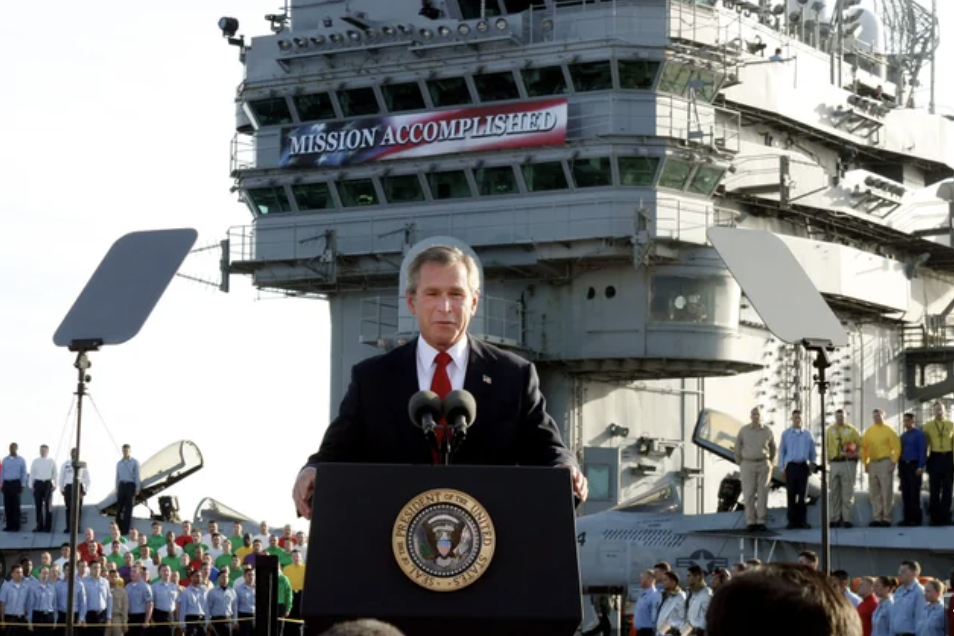
This literature review discusses how Western media, political debates, and cultural works have portrayed Iraq before and after the September 11, 2001, attacks. Iraq is located in West Asia, often referred to as the “Middle East.” The country has faced ongoing internal conflict, outside interference, and frequent misrepresentation. For many years, U.S. interests and broader Western political aims have influenced the view of Iraq as a source of “global terror.” This review argues that these portrayals stem from orientalist ideas, colonial stories, and power dynamics. These factors shape public support for military actions, surveillance, and control.
This review builds upon Edward Said’s influential book, Orientalism (1979), and examines how the West portrays Iraq. It emphasises a long-standing perception that characterises the East as “irrational, depraved, childlike, and different.” Said argues that these labels do more than merely describe; they carry significant political implications and reinforce notions of domination. Before 9/11, particularly in Hollywood, Arabs and Middle Easterners were frequently depicted as the “exotic other,” often positioned as adversaries to morally upright American heroes (Arti 2007).
Such portrayals contributed to an audience’s perception of Western norms as superior while framing Middle Eastern societies as violent, backward, and threatening.
Said’s later work, Covering Islam (1981), shows how Western media simplifies Muslim societies and presents them as aggressive. Amin-Khan (2012) and Tumber and Palmer (2004) also discuss this idea. They explain that U.S. media often supports American political goals, reinforcing national myths and justifying foreign policies.
In the 1990s, major news outlets like CNN used orientalist stereotypes when covering the Gulf War and Iraq. They depicted Saddam Hussein as the face of Iraqi identity while ignoring the country’s wider social and political issues (Al Sharafat, 2021). This portrayal showed Iraq as a rogue and dangerous nation, making it seem necessary to intervene from the outside.
The 9/11 attacks marked a major shift in Western media discourse. Scholarship widely agrees that post-9/11 narratives intensified civilisational binaries, reinforcing the divide between the “powerful” West and the “Oriental” East. In his book The Colonial Present (2004), Derek Gregory examines how people viewed Iraq and Afghanistan through the lens of old colonial ideas about civilisation and intervention. He refers to James Der Derian’s point that war is often justified by differences between “us” (the U.S. and its allies) and the “other.” This idea supported the War on Terror. As a result, people framed Iraq as an important battlefield in the global fight against extremism, even though there was no evidence linking Iraq to the 9/11 attacks.
Anti-Muslim feelings were already common in Western media before 2001 (Amin-Khan 2012), but they got much stronger after the September 11 attacks. News coverage of the War on Terror often showed Islam as inherently violent and connected it to global terrorism (Kellner 2004). As support for a long military engagement started to fade, Hollywood and other media helped revive pro-war feelings through films and stories that highlighted U.S. heroism and painted Middle Eastern people as villains (Ennanciri and Jebbar 2022).
The existing literature indicates that Western media have historically contributed to a narrative that presents Iraq—and the Middle East more generally – as a threat that needs Western intervention or control. As Mutman (1995) argues, the world is shaped by power dynamics and is already framed within the overarching narrative of the West. This point is further supported by the continuities in media representations before and after 9/11. These narratives not only helped gain public support for the War on Terror but also heightened xenophobic ideologies and led to the demonisation of Muslim communities (Said 1981; Amin-Khan 2012).
Charlene Okai

Buy Sophisticated Hand Guns Now
Europas Premium-Begleitpapageien aus Hausaufzucht
Ragdoll-, Siam- & Ragamese-Kätzchen europaweit🐱
Ragdoll-, Siam- & Ragamese-Kätzchen europaweit🐱
Reinrassige Deutsche Schäferhundwelpen europaweit verfügbar 🐕🦺
╬ Home-Raised Parrots. Lifelong Companions🪶 ╬
Tiny PomChi Puppies Ready for Loving Homes
Premium Pinball,
Arcade & Foosball Machines Canada🚚