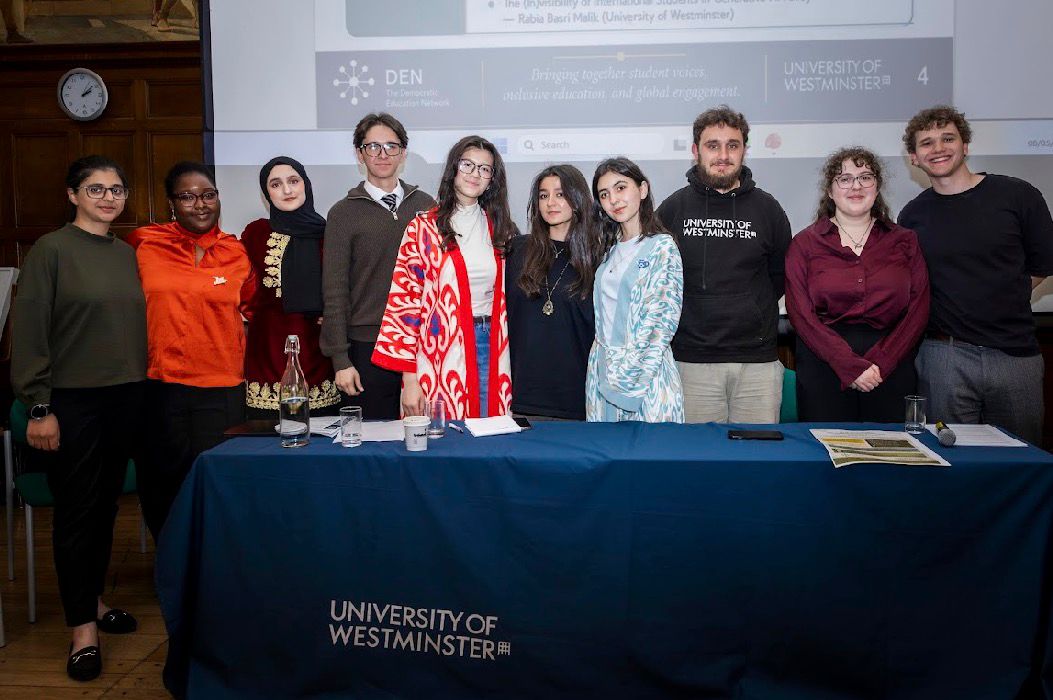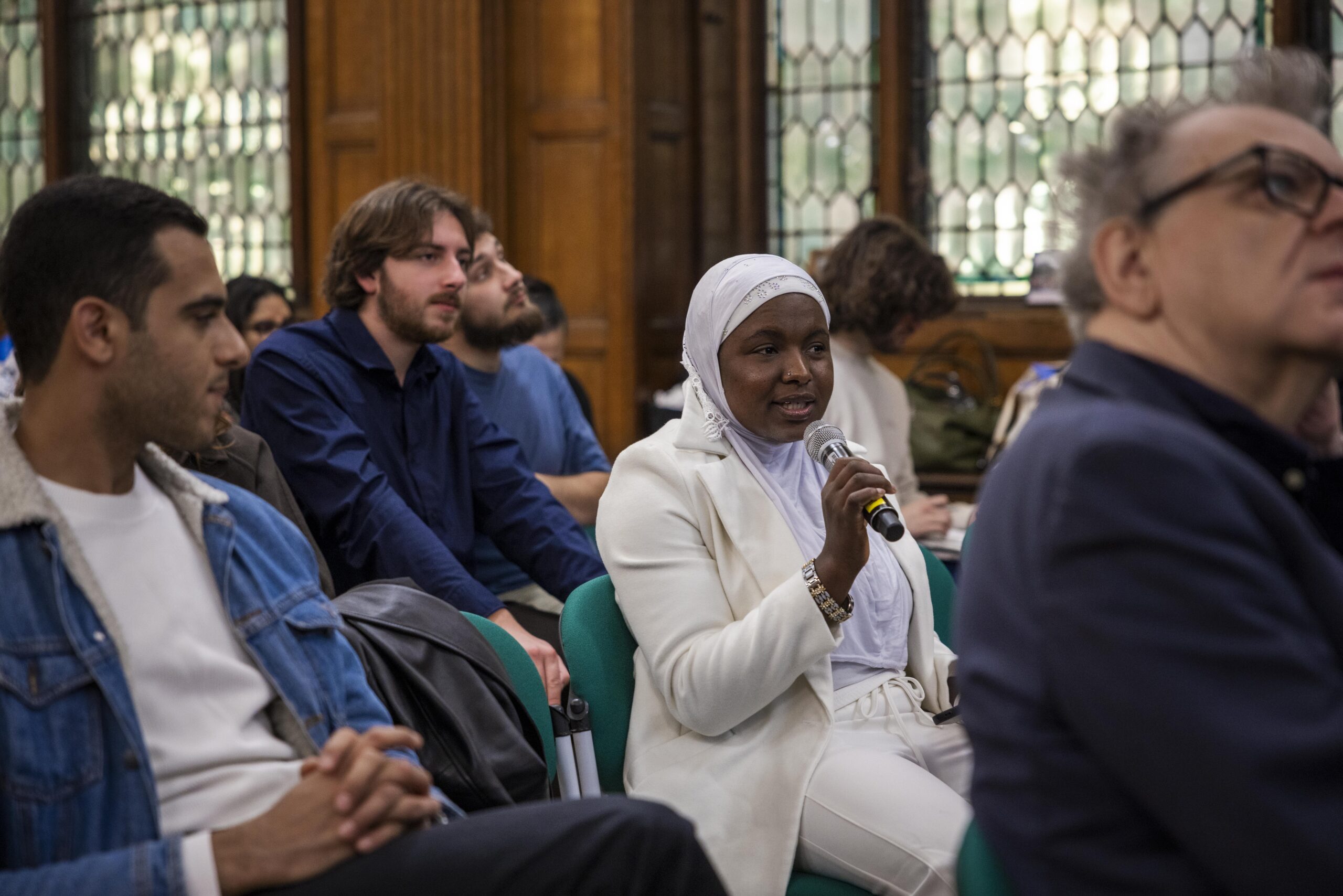
Imagine a hall full of people, quiet yet deeply alive, each person listening with the same quiet hope: to hear something that matters. In that moment, I understood that a conference is not just a place for speeches. It is a space where voices meet, ideas breathe, and every story leaves something behind. I am Mekhrangiz Khoshimova, a Level 4 Business Management student at Westminster International University in Tashkent. What began as an academic course soon became something much more meaningful, a journey of teamwork, purpose, and growth. Through our shared effort, we earned the opportunity to attend the Democratic Education Network (DEN) conference at the University of Westminster in London. That experience stayed with me. Not only because of where I went, but because of what I felt there: that youth, when given space and responsibility, can speak with confidence, connect across cultures, and create real change. At the DEN conference, I felt something that is hard to describe with ordinary words. We presented our topic, “The Silk Road Never Ended – It Just Went Digital,” and in that moment, I was not only speaking as a student. I was speaking as someone representing Uzbekistan, its culture, its history, and its place in the world. That made me feel deeply proud. It was more than just a presentation. It felt like a responsibility, and at the same time, an honour. One of the most memorable moments for me was when Professor Peter Bonfield learned the word mahalla from our presentation. That moment stayed with me. It was small, but powerful. Mahalla is more than just a neighbourhood. It is a space of connection, support, and shared life. And when he repeated that word, I felt that we had managed to create exactly the kind of atmosphere we were talking about, one where people learn from each other, listen to each other, and value each other’s experiences. In that sense, the conference itself felt a little like a mahalla: a place of exchange, belonging, and mutual respect.
What made the event even more meaningful was hearing from other international students and their presentations. Their ideas were thoughtful, timely, and relevant. They spoke about artificial intelligence, society, and the changes shaping our future. Each presentation offered something different, something valuable. Looking back, I wish I had listened even more carefully to every speaker, because each one had something important to say. And I am especially grateful to Dr. Farhang Morady, because without his vision and effort, this opportunity would not have existed. His work created a space where young people could come together and speak about issues that matter. London itself made the experience even more unforgettable. To be in London for six days felt like a privilege. I was especially struck by the architecture. Every building seemed to carry its own character and history. Compared to Tashkent, the streets felt narrower and quieter, and somehow that made the city feel even more charming.
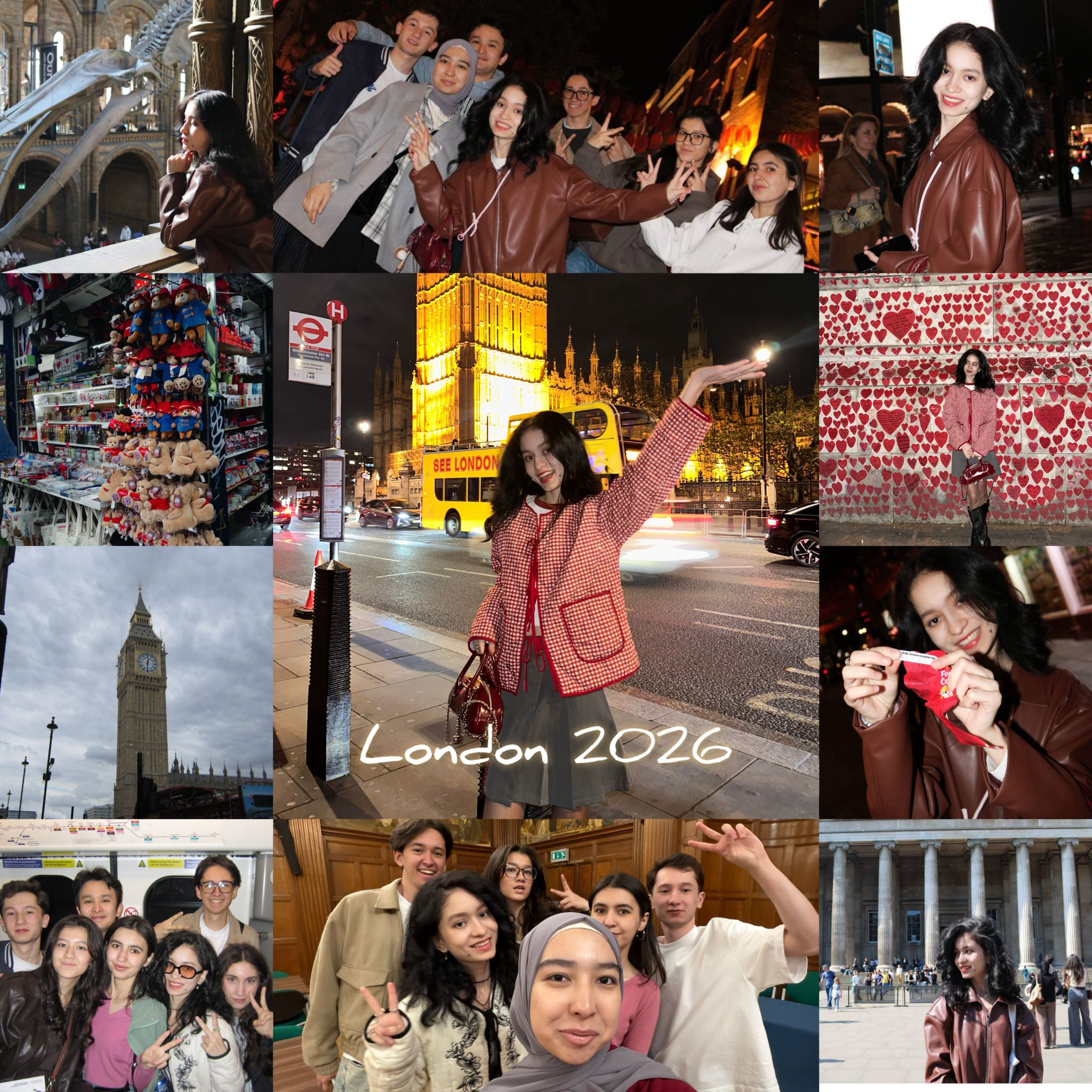
The weather was another surprise, cool, unpredictable, and very different from the warmth of May in Tashkent. But even that became part of the experience, and I was glad we came prepared. One of the places I enjoyed most was the area around Chinatown and Soho. It was lively, colourful, and full of energy, the kind of place that feels perfect for spending an evening with friends. Another unforgettable moment was riding the iconic red double-decker bus. Even in the rain, it felt like such a special experience, almost like I was inside a movie. London had that effect on me the entire time. I kept asking myself, almost in disbelief, “Am I really here?” It felt unreal in the best way. What made the trip even more meaningful was the fact that I also got to meet my sister there. She lives and works in London, so seeing her during this journey felt especially precious. We tried to make the most of every moment. We visited Big Ben three times, which still feels unbelievable to me. We also appreciated the hospitality of the University of Westminster, especially the restaurants they took us to and the care they showed us throughout the trip.
The Westminster students were especially kind and supportive. They stayed with us from morning until evening, guided us through the city, and helped us experience as much of London as possible in such a short time. Their effort made the whole journey feel warm and welcoming. One of my favourite small memories was sitting in Hyde Park with the others and playing truth or dare. It was a simple moment, but it captured the spirit of the trip beautifully- friendship, laughter, and connection. By the end of those six days, I did not just return with memories of places. I returned with a deeper appreciation of people, ideas, and the power of shared experience. This conference taught me that youth can make change, culture can build bridges, and even a single word – like mahalla – can carry an entire world of meaning.
Mekhrangiz Khoshimova