A Colombian alumna, from loneliness as an international student to DEN’s Vietnam and Türkiye trips and the magazine that carried her through lockdown
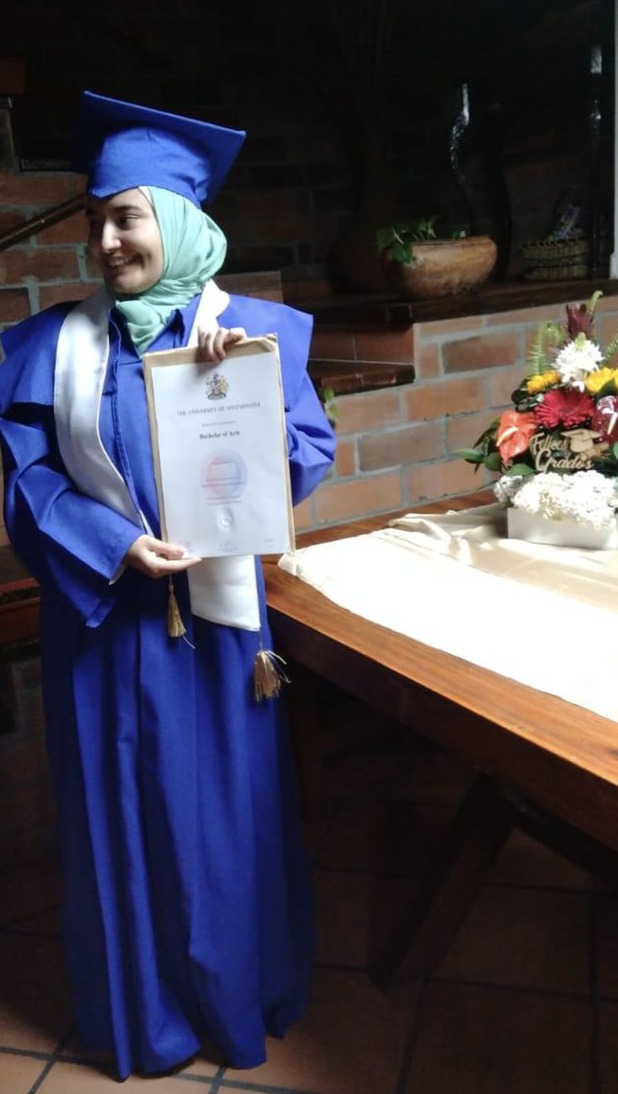
Natali Usma Bustamante, BA Politics and International Relations, University of Westminster, Class of 2021; now based in Colombia
Part of the Inside Westminster anniversary series marking ten years of the Democratic Education Network.
* * *
How did you first come into contact with DEN?
Being an international student was never easy, especially when you are completely alone in a country where the language is not your mother tongue. I remember going through my classes, trying to concentrate and study while struggling to stay afloat, balancing rent, work, and personal life. Honestly, I was going through a hard time, and I felt lonely.
Then, in one of my classes, I met this amazing, enthusiastic, empowering Professor who looked just like my dad. While I was talking with my classmates, he came over and offered us the chance to stay after class to attend a small extracurricular group that could help us understand more about political and international events.
I was hesitant. I did not want to meet new people, and I did not want to add more tasks to a schedule I was already drowning under. I thought it was just going to be an extra load. But I saw his enthusiasm, and my classmates’ willingness to say yes, and I decided to give it a try. Never would I have thought those short hours would become such a big part of my university life. I am eternally grateful to God, and to everyone who pushed me to join what turned out to be the greatest network I have ever known.
Which DEN activities have you taken part in?
We met, and we planned all sorts of activities within the network that could improve our professional profiles and develop us as political agents in international settings. That basement where we discussed different approaches and projects ended up being the loveliest place in the whole university. I would find myself impatiently waiting for classes to end just to go and talk to the other students, plan projects, and have fun.
We took part in the International Conference and won yearly national recognition for it. Galas and charitable events connected us with NGOs such as Students4Refugees. We had enriching opportunities to visit different UN locations. The magazine, where students could think, write, and be critical about different topics, was a great help during COVID-19. I think most of us stayed sane thanks to it.
I also joined the international discussions and field trips that sharpened our critical thinking on the development and political situations of different countries, including Türkiye and Vietnam. Those trips changed my life, and I had so much fun networking with international students along the way. Certainly, DEN was the happiest, most proactive part of my studies at the university.
Was there a moment at DEN that has stayed with you?
Within DEN, many students found the support they needed thanks to the professors, who were constantly caring. Even in small words, I found the comfort I needed. “Push yourself a little. You will accomplish great things.” And: “Do not regret that which you cannot change.” Those words changed my mindset to a positive and hopeful one. Always to expect the best, and always to act with the best intentions.
What aspects of DEN have had the biggest impact on you?
The greatest impact for me has been the non-judgmental, and yet completely professional, approach of each leader guiding young students to success. It is not easy to find a caring, committed family with no blood bonds, who just wants to see you win in life. DEN is a community that I needed when things got difficult. It is a little piece of support, peace, and comfort in chaotic spaces.
How has DEN helped you develop personally?
DEN helped me achieve great things. I was able to grow different capacities, to build my confidence, and to improve my communication, teamwork, and problem-solving. I was able to take on new challenges, to multitask, and to approach situations with a positive, proactive mindset.
Has DEN helped you with employability or professional development?
DEN has played an important role in helping me become more confident, more responsible, and better prepared for future opportunities. The skills I developed through my path with DEN, and the successful projects and interactions I was part of, have opened opportunities for me across different career paths. They have also made me a valuable asset to different companies, even in international remote settings.
What is one thing DEN has given you that you would have struggled to find elsewhere?
DEN has given me a supportive international community, and a safe environment to challenge myself, develop new abilities, and prepare for future opportunities. The encouragement, the practical opportunities, and the meaningful connections that DEN provides would have been much harder to find elsewhere. It has given me the supportive and challenging network I needed to grow, both personally and professionally.
What advice would you give to students thinking of joining?
Please do not hesitate to join, and to take part in different projects. Even the smallest can make the biggest impact. DEN goes far beyond the community. It helps you earn career opportunities while being a genuinely supportive environment.
First impressions are not always the best. But small, consistent actions go further than you might expect. Even if you feel alone, this network will be a partner for life. So take the opportunity, take the challenge, and enjoy it, because life goes by quickly, and what you do will stay with you until the end.
What would you say to a colleague at another university?
Honestly, I would try to persuade them to join Westminster just to be part of DEN for their entire university life. I would recommend DEN for its opportunities for personal and professional development, for the confidence it builds, the practical skills it develops, and the supportive community it connects you to. DEN makes a real difference to career prospects and personal growth, while bringing together people with all kinds of different backgrounds.
Should DEN do anything differently in the next decade?
I loved, and I keep rooting for, more intellectual trips all around the world. That is something DEN should always stand out for.
The other point I want to highlight, which is probably a legacy of COVID-19, is that many students I have seen struggle with mental health. Even though there are campaigns about it, I noticed that many students did not find the support they truly needed because of their background: religion, ethnicity, or perspective. We all need some common ground that is familiar and relatable. Professors and leaders care more than they have to, and other students relate and partner, but what is truly needed are mental-health professionals with diverse backgrounds who form that closeness within this network. Support that acts from within, rather than only from the outside.
Anything else you would like us to know?
Ten years have gone by so fast. The only regret I might have is not being more engaged with DEN when I could have been. So, future networkers, future students, future leaders: please be as proactive as you can, and you will achieve many things. I love DEN very much, and I pray all the best, always. Do not despair of the mercy of Allah. Indeed, He is All-Hearing, All-Knowing.
* * *
Photo caption: “A caring, committed family with no blood bonds, who just wants to see you win in life.”