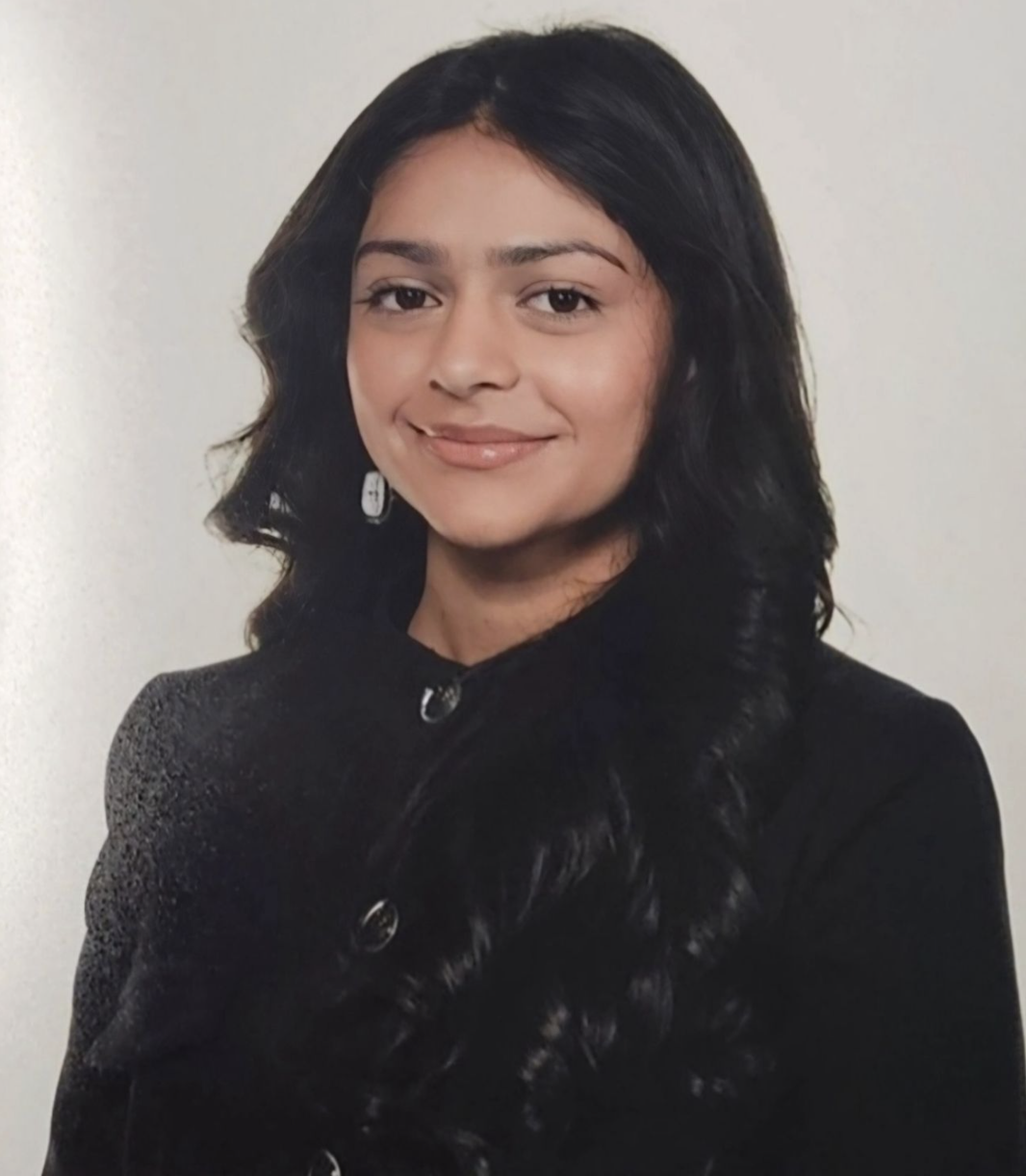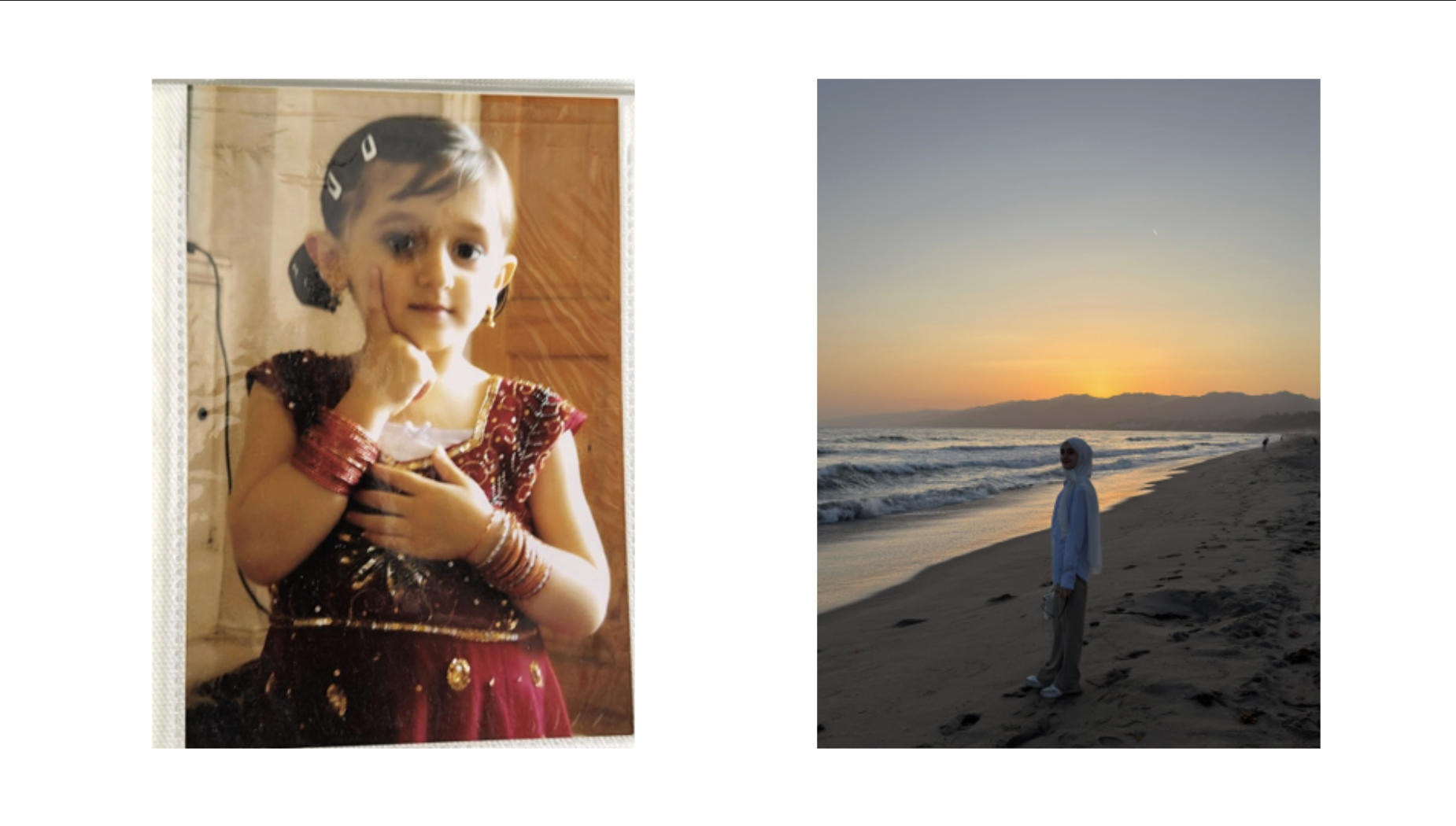
This interview is part of the Democratic Education Network’s online magazine and forthcoming book, Transforming Education: Innovation for Sustainability in the AI Era. It centres student voices and lived experience as vital forms of knowledge in shaping more just, democratic, and inclusive education systems.
In this conversation, we discuss how ethnicity, culture, and migration affect education. We go beyond personal stories to examine how individual experiences connect with broader issues of power, inclusion, and inequality in education worldwide.
In this interview, Negena Mahmoud shares her educational journey and links her experiences to key global issues, including the Sustainable Development Goals, democratic participation, and the ethical use of artificial intelligence in education. She emphasises the importance of resilience, identity, and student agency in creating education that is more sustainable and fairer.
This conversation aims to create a clear narrative that connects personal experiences with global responsibilities. It seeks to contribute meaningfully to discussions about the future of education among students and educators.
- Your story, identity, and journey
Can you tell us about your educational path and what led you to your current role?
I was born in London, and my early education started in nursery school before my family moved to Afghanistan. I learned English, Science, and the national second language, Pashto, as part of the national curriculum from Reception to Year 4 at a private school.
A bomb explosion near my school remains one of my clearest memories, even though most other memories from that time are hazy. The school remained under lockdown for several hours until the area was safe and my father could bring me home. This event taught me about the elements of risk and survival while demonstrating the significance of security and education.
The move back to London in 2015 led me to join Year 5 at Hazelbury Primary School. During my 2 years at that school, I learned to adjust quickly to my new surroundings while making numerous friends. My interest in politics developed at Hornsey School for Girls during my secondary education, so I can now study Politics and International Relations (PIR) at university.
My time at Hornsey included debating in the debate club from Year 7 through Year 9, as well as student leadership positions during both 2019-2020 and 2021-2022. Through First Give, I helped my class collect £180 and then secured an additional £1000 for our chosen charity. I led my GCSE Active Citizenship campaign in 2022 to support a local homelessness charity, raising more than £250. This experience strengthened my political interest while fuelling my desire for social transformation.
After finishing my GCSEs, I started my education at Enfield County Sixth Form to study Government and Politics together with Business and Health and Social Care. My February 2023 assembly focused on the Iranian protests alongside the Taliban’s control of Afghanistan. Public speaking became more natural for me after this experience, which forced me to step outside my usual comfort zone.
A significant achievement during my sixth form education was participating in Kate Osamor’s Politics Summer School, held at Portcullis House in Westminster. The experience allowed me to meet Jeremy Corbyn, Deputy Prime Minister Angela Rayner and other motivational political figures. We travelled through Parliament while we watched debates of the Northern Ireland Troubles Bill and PMQs, which focused on NHS funding.
After finishing my A Levels, I started my studies at the University of Westminster, where I chose Politics and International Relations as my major. Since then, I haven’t experienced any regrets. I joined the Global Diplomacy Initiative (GDI) society at the university and participated in many activities beyond campus. The Democratic Education Network (DEN) welcomed me when I joined the organisation and gave me motivation and a positive reception.
Ever since I joined DEN, I have written and reviewed blogs, chaired meetings, helped with events planning, served as treasurer and social media manager for a field trip to Thailand, led workshops and served as the Logistics and Student Experience Lead for the DEN Summer School 2026. I have been very privileged to partake and take on more responsibilities while learning from others and giving back in any way possible.
How would you describe your cultural or ethnic background, and what does it mean to you?
I would describe my cultural or ethnic background as both fruitful and hopeful. I am Afghan, and I have always been an advocate for Afghanistan and its people. It’s a beautiful country filled with beautiful people, and I wish more people could recognise its worth. It truly is an unforgettable place, and I will forever call it home. I have bittersweet memories from my time in Afghanistan, but I always have the longing feeling of going back home again. I have not been back to Afghanistan in over a decade, mainly due to the country’s political instability and danger, as well as other commitments, but it has always been at the forefront of my mind and a topic I’ll forever be passionate about.
In what ways do you think your background has influenced how you learn, think, or connect with others?
My background has helped me realise how much of a privilege it is to be educated and to be safe, without worrying every day whether I would make it out alive. In the majority of my experience, people have been very respectful and empathetic of the horrors I’ve witnessed or experienced but I will admit, there have been times where I’ve realised how unaware certain people can be of traumas and experiences which seem so bizarre or unrealistic to them but is very much true for so many people back home but also across the world.
2. Inclusion, exclusion, and belonging in education
Have there been moments in your education when your background helped you feel included, valued, or strong?
The most recent example of when my background has helped me feel included and valued is preparation for KUMUN 2025 in Thailand. I was able to share my knowledge and Afghanistan’s history to my fellow classmates since the KUMUN that we were participating in was focused on Afghanistan and the Taliban in the United Nations Security Council (UNSC). I was able to answer my classmates’ questions and provide guidance on the MUN based on my previous experience in TIMUN 2025. My background has been a strong pillar in my life and something I am proud to represent and speak persistently about, despite the continuous negative media portrayals over the years.
Have there also been moments when your ethnicity, language, religion, nationality, or accent made you feel different, excluded, or misunderstood?
I think language and religion have been two of the biggest challenges I have and continue to endure. Living in a Western country means the environment is completely different from that in Afghanistan. This means I can’t communicate with everyone I meet in Dari, since the UK is an English-speaking country and not everyone here speaks Dari. This does make me feel different and sometimes misunderstood when translating a Dari saying into English, as an example.
In terms of religion, it has been somewhat of a lonely journey too since the UK is not like back home to announce the call to prayer 5 times a day loud on the speakers in the streets everywhere. This, in turn, also makes me miss the people and communities coming together to pray, which is also very similar to other countries with Islam as their main religion/commonly practised and the feeling someone experiences hearing the call to prayer for the first time or after many years later.
What helped you cope, and what do you wish educators had done differently?
Persevering through is what helped me cope alongside my family’s support. I wish educators would speak up more about conflicts in Afghanistan and other countries and regions. Afghanistan is often one of those countries overlooked by everyone, and there definitely needs to be more education and awareness about the huge population that lacks the attention it needs to address the serious humanitarian crisis’ it has been facing for many years.
3. Voice, power, and democratic education
When have you felt that your voice really mattered in education?
When the fall of Kabul happened in 2021. I remember being in a complete state of shock upon hearing the news from the country through family and the news. I knew I was put on this earth for many reasons, but that moment in time proved to be my biggest reason. I needed the world to hear and understand the severity of the situation in Afghanistan. It has been a driving force in what I believe and stand up for, and something I’ll forever use my voice to preach the rights of the Afghan people, especially women and girls.
Do you think some voices are heard more easily than others in universities?
Yes, one hundred per cent.
Why?
Because certain voices don’t seem to tick all the criteria in order for people’s voices to be heard. Because we don’t look or sound a certain way. And although it is unfortunate, it is something that has long been in the system and will take the actions of many to overcome for the greater good.
What would democratic education look like for students from minority, migrant, or refugee backgrounds?
Democratic education would look like a true representation of history to me. It would be the true and honest education of the lives of the minority – not the British version. It would mean making education and employment within education more accessible than it currently is. It would mean limiting the restrictions placed on certain backgrounds to gain entry to high-achieving educational places and spaces. It would mean freedom to me.
How familiar are you with the democratic systems and processes in the UK? Have you ever interned at any political institutions? If so, how did you get in, and why? Would you advise students to do it?
I would say I am very familiar with the democratic systems and processes in the UK. After all, I have been active in politics in various ways for the last 9 years of my life. As a matter of fact, I did an internship at the House of Commons with a Labour MP from October 2025 to January 2026. I completed a summer school with Kate Osamor in 2023, and through that connection, I contacted her to ask for the opportunity to intern with her. I decided to intern in parliament because I wanted to see and experience the daily life of a parliamentarian. I would definitely advise students to do it because it is such a unique place to work. You’ll be walking in the same places where the decisions of the country are made, and it is so profound to even comprehend the capacity at which you are participating in bringing change to the country – whether it’s on a local or national level. I have no regrets and am so grateful to have had the opportunity to complete my internship at a monumental place with amazing colleagues who always guided and supported me on my journey.
4. Sustainability, justice, and lived experience
When you hear the word “sustainability,” what does it mean in your own life or community?
Sustainability means looking out for my home. What I mean by home is the planet we’re all living on. We all have a duty to protect the beautiful world we live in and pass on the great wonders of nature to future generations, so they can also enjoy its wonderful beauty. In my own life and community, it means managing waste properly by reusing and recycling products, purchasing items that follow ethical sustainable practices to keep our planet safe, reducing plastic usage, using public transportation, walking, etc.
Are there struggles linked to inequality, gender, displacement, racism, poverty, or conflict that feel personal to you?
All of the above feel personal to me. I have experienced or witnessed others go through tough challenges in their lives, and it has been difficult. It’s difficult to see some people enjoy so many of the world’s luxuries, yet others on the other side of the world struggle to provide food for their families, as one example. My heart breaks knowing how much inequality people face on a daily basis just because of the place and family they’re born into, alongside other factors. While it is challenging, it also gives me hope that, slowly but surely, we, the people, will use our voices and opportunities to do more and give more to those who are less fortunate than us, and address the difficulties.
Which of the SDGs connects most strongly to your experience, and why?
SDG 16 ‘Peace, Justice and Strong Institutions’ connects most strongly to my experience because it is all I have ever wanted. Peace. Peace for Afghanistan. Peace for the people around me. Peace for the world. And although it is a long and tumultuous journey, I am more than willing to be part of the positive change and go through whatever it takes to guarantee a freer and just world for everyone around me.
5. AI, technology, and inclusion
How do digital tools and AI affect you as a student?
Some ways that digital tools and AI have affected me as a student are by explaining concepts I had never heard of before, brainstorming and creating new things and keeping in touch with friends I’ve made internationally.
Do you think technology reduces inequality, or sometimes reproduces it?
I think it is a bit of both. Inequality can be lessened by technology, but it can also be reproduced or even intensified. Who creates it, who can access it and how it is regulated are the main concerns.
On the one hand, technology clearly has the ability to level the playing field. Digital tools can increase access to political involvement, information and education. Social media, open-access research and online learning platforms have reduced obstacles for those who might otherwise be shut out because of their location, income or marginalisation. In this way, especially for people who have historically been marginalised, technology may amplify voices, facilitate group action and open new possibilities.
But technology frequently deepens already-existing disparities. A persistent digital divide results from unequal access to digital infrastructure along racial, gender, class and geographic lines. As more social, economic and political processes shift online, people without dependable internet, devices or digital literacy become even more disadvantaged. In this sense, rather than reducing disadvantage, technology might exacerbate it.
How could AI be designed to better support students from diverse cultural and linguistic backgrounds?
When AI is inclusive by design, culturally aware, pedagogically grounded and democratically regulated, it can better assist a diverse student body. Without these pledges, AI risks perpetuating the very injustices it promises to address.
6. Cross-cultural learning and global solidarity
What has it been like studying in a multicultural environment?
It has been a really rewarding opportunity to study in a multicultural environment. I have gotten to meet and connect with people from all over the world across so many disciplines, and it’s so refreshing to engage and participate in meaningful conversations and experiences with them.
Have your perspectives on other cultures or on your own changed?
Yes, it has, in a positive way. I’ve learned how loving and respectful people are, and how you feel a sense of community with people from all over the world when you share the same beliefs and morals. It truly is a liberating feeling knowing you’ve got people supporting you in all the brilliant endeavours you may set upon.
What does global solidarity mean to you as a student?
Global solidarity as a student means standing up for injustices we see and potentially experience. It means being the voice for change in a world full of lies and deception. It means speaking out when others are complacent to the wrongdoings of others. It means being on the right side of history. It means being human.
7. Growth, confidence, and leadership
How has being part of DEN or similar spaces influenced your confidence and sense of belonging? When have you felt proud of your identity, voice, or achievements?
DEN has increased my confidence through continuous public speaking opportunities. DEN is a family on so many levels and definitely creates a sense of belonging no matter your background. It is the perfect space to be in order to enhance your qualities and work on your shortcomings to become a better person in all aspects of life. DEN has changed my life in ways I never thought possible and made it a hundred times better than it probably would have been. I’ll forever be grateful to DEN and champion its benefits and positive effects for the foreseeable future because it’s made me part of an amazing network of people – people who I’ll always have a connection to and am glad to have met.
There are many moments when I have felt proud of my identity, voice and achievements, but one that currently stands out is when I spoke up against the ‘skit’ some Thai students performed at KUMUN 2025 during my field trip to Thailand. I was completely uncomfortable with what unfolded during the ‘skit’ and chose to speak up and defend the lives of millions of people who were essentially mocked and undermined during that moment – considering we were all there, partaking in something meant to resemble the real-world UNSC. It felt good to stand up and protect the dignity of my people in a space where it wasn’t respected as it should have been, and something I do not take lightly, as otherwise suggested.
What kind of leader or graduate do you hope to become?
I hope to become a leader who continues to stand up and address injustices and provide comfort to those who need it. We live in a very cruel world, and I want to leave an amazing legacy so people remember the positive attributes and contributions I made to society, despite the dark world we all live in.
8. Reimagining education
If you were designing a university that welcomes students from all backgrounds, what would it look like?
If I were creating a university that truly welcomed students from all backgrounds, it would be based on shared power, dignity and belonging in addition to access. Instead of being symbolic, inclusion would be structural. There would be access without hidden barriers, a curriculum that reflects the world, pedagogy rooted in care and participation, language and support as strengths not deficits, democratic governance and student power and community, not competition. Essentially, my university would view diversity as a source of knowledge, innovation and democratic potential rather than as a management burden. It would enquire about how the institution must adapt to accommodate its students rather than how students can fit into it.
What changes are necessary for education to become genuinely inclusive, ethical, and globally responsible?
Change at the level of institutions, knowledge and power – rather than just policy language or diversity initiatives – is necessary for education to become genuinely inclusive, ethical and globally responsible. What is needed is a change in how education views its role in society and its goals. There needs to be structural inclusion not symbolic access as previously mentioned, decolonising knowledge and curricula, pedagogies grounded in care and democracy, technology governed by ethics not efficiency, global responsibility beyond mobility and democratic governance and accountability. In conclusion, rethinking education as a public, democratic good dedicated to justice, caring and global interconnectedness rather than rivalry and prestige is necessary for truly inclusive, ethical and globally responsible education.
What message would you like educators and policymakers to take away from your ideas?
One message I would like educators and policymakers to take away from my ideas is to start listening to the younger generation, especially students. The younger generation has long been undermined in terms of decisions being made that will affect their generation without their input, and this must come to an end sooner rather than later. It is time to have discussions and include young voices at decision-making tables where positive change is bound to happen. You won’t know all the good that could come into life unless you give a seat at the table to voices like mine to speak and bring about the changes we all crave to see and be a part of.
9. Closing reflections
What does “transforming education” mean to you based on your experiences?
“Transforming education” means shining a new light on learning beyond traditional ways. It means partaking in new ways of learning and engaging with our work as students that will leave us forever impacted and reminiscent of the amazing opportunities we took to become and do whatever our hearts desire.
What gives you strength or hope?
My dreams give me hope. My family. My friends. My country. My professor, Farhang Morady, gives me the strength to become the best version of myself. My university experience would not have been what it is had I not met the brilliant man behind the phenomenal initiative, the Democratic Education Network (DEN).
Is there something about students from your background that you feel is frequently misunderstood or overlooked?
Yes, constantly. It is common to view students from my background solely through a perspective of conflict, trauma or deficit, rather than as multifaceted persons with agency, aspirations and intellectual resources. Therefore, the ability of students from my background to contribute critical perspectives on power, ethics, migration, resilience and global responsibility – if educational spaces are prepared to listen without predefining who they are supposed to be or do – is most frequently disregarded rather than needed.