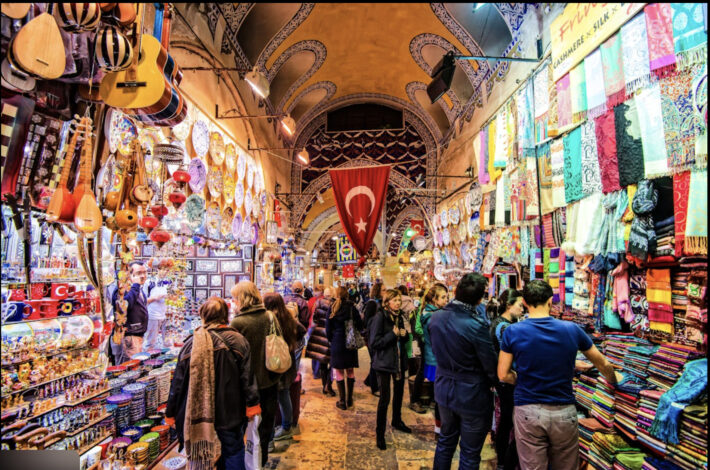
In two weeks’ time, we will go on a trip with the university to Istanbul, Turkey, to explore new environments and widen our perspective on the Middle East. This journey holds particular significance for me as a student of Politics and Development in the Middle East. After studying the theories and geopolitics of the region, I am excited to experience the reality of a country that is often perceived as different or even exotic to the West. During our trip, we will visit a local university and meet Turkish academics to discuss political and social developments in Turkey. I am especially looking forward to hearing how local professors interpret the issues we often study through a Western lens. Engaging with them directly will allow me to question some of the assumptions that I have heard from the UK media or academics at my university. In our course, we have studied the theory of Orientalism, which critiques how the West has historically represented the East as exotic, undeveloped, or fundamentally ‘other’. This idea has encouraged me to think critically about how knowledge about the Middle East is produced and how these portrayals can influence international politics and development policy.
As I prepare to visit Turkey, I find myself reflecting on how Orientalist narratives might still shape the way Western society perceives the region. Before this trip, my view of Istanbul had been formed by social media images of grand mosques, crowded bazaars, and vibrant streets. I hope that by walking through the city, speaking with its people, and seeing its main sites up close, I can move beyond these surface-level images. I want to understand how Turkey defines its own path of development, and how its citizens navigate the tension between modernisation and tradition. Of course, I am also looking forward to seeing the famous sites such as the Hagia Sophia, the Blue Mosque, the Bosphorus, and the Grand Bazaar. But I hope to see them not only as tourist attractions, but as something unique and deeply connected to the history and culture. My expectations for the trip are high as I aim to broaden my academic and cultural knowledge of the region and apply it to my future work. I view this journey as an opportunity to reevaluate my perceptions and connect theory with lived experience. I aim to return with a deeper understanding of how Turkey and the broader Middle East differ from the frames through which it is often viewed.
Marharyta Andreieva