
And Other Things London Taught Me
This year, I had the opportunity to attend the DEN Conference in London, invited by Dr Farhang Morady following the publication of my article on sustainable energy in DEN’s annual student book. I travelled alongside a group of SDG course winners from Westminster International University in Tashkent — we were all heading to the same conference.
The Democratic Education Network (DEN) Conference
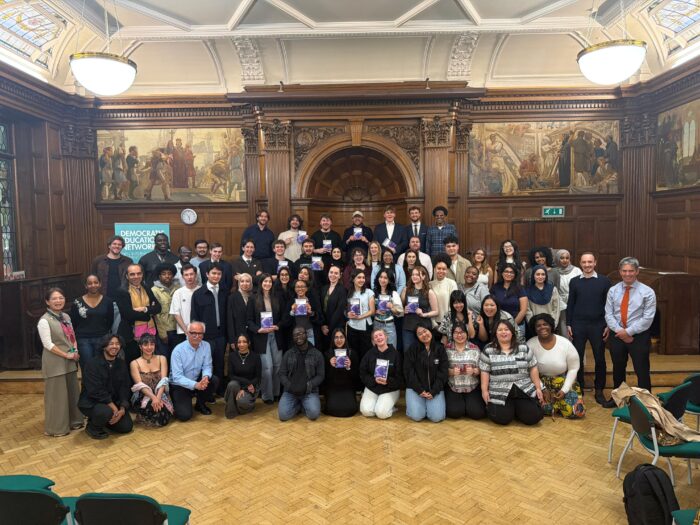
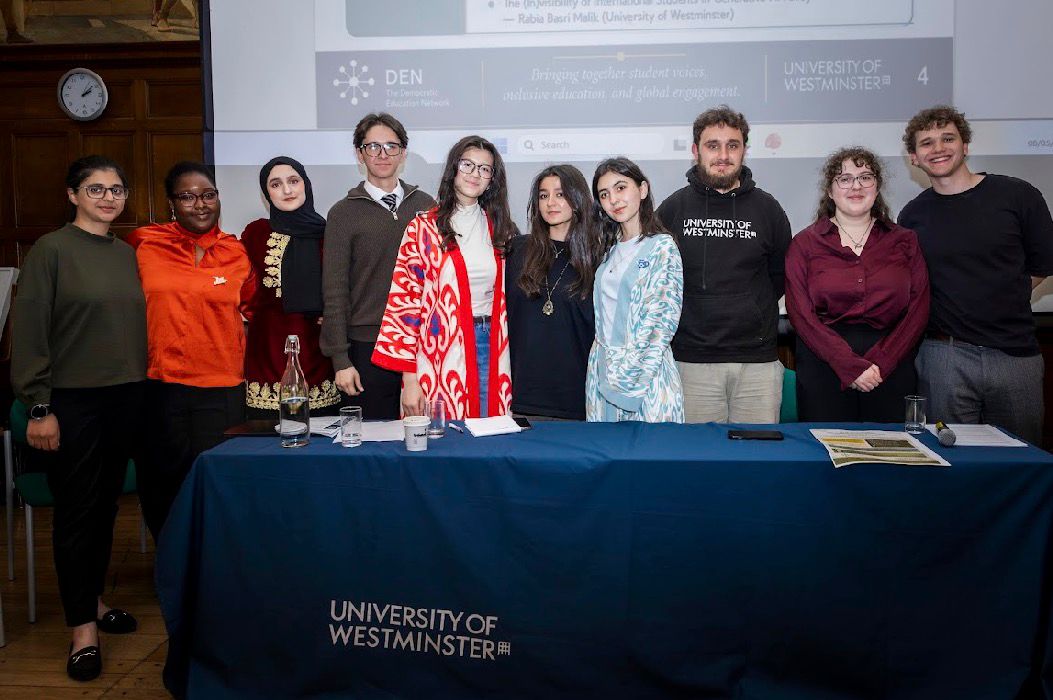
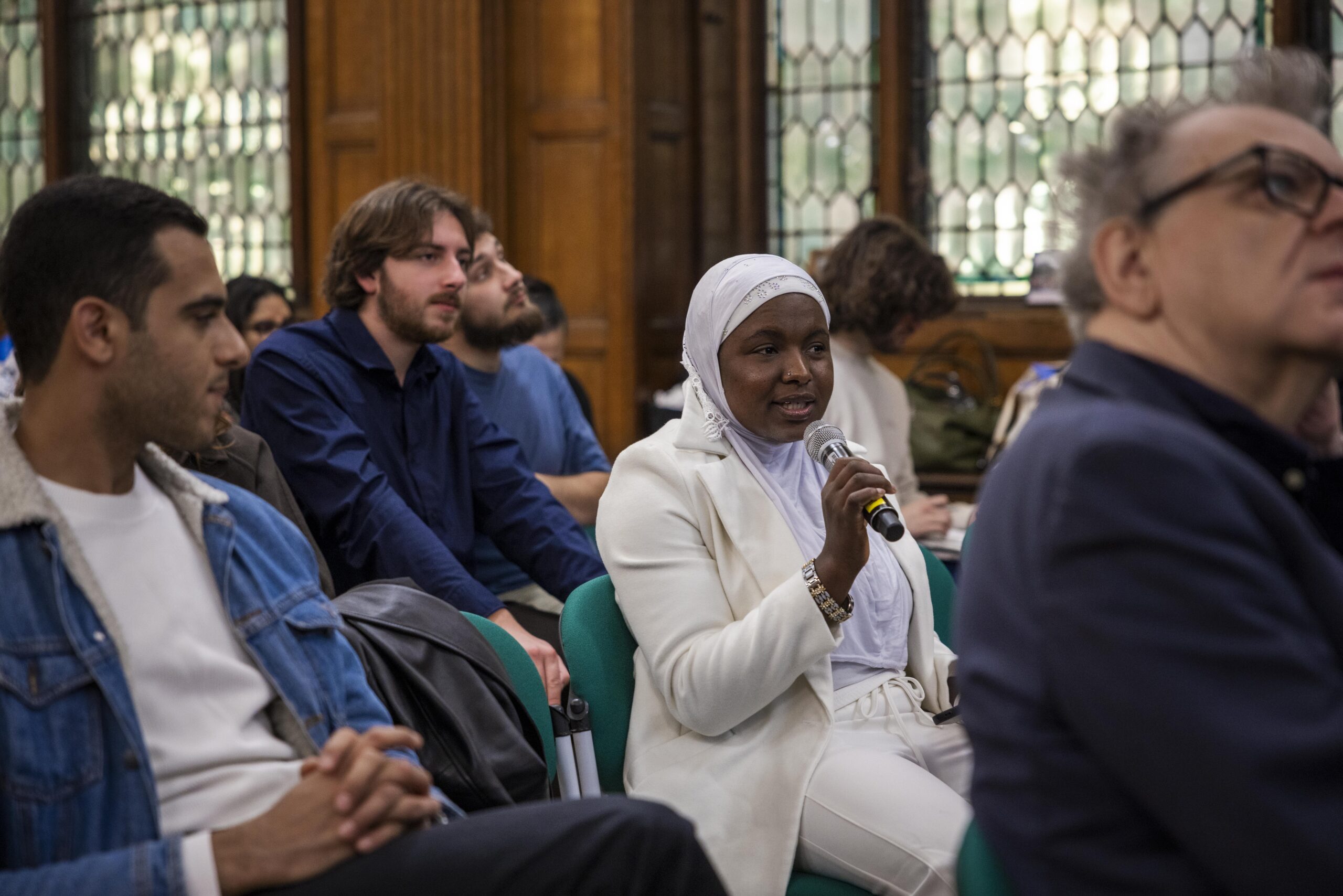
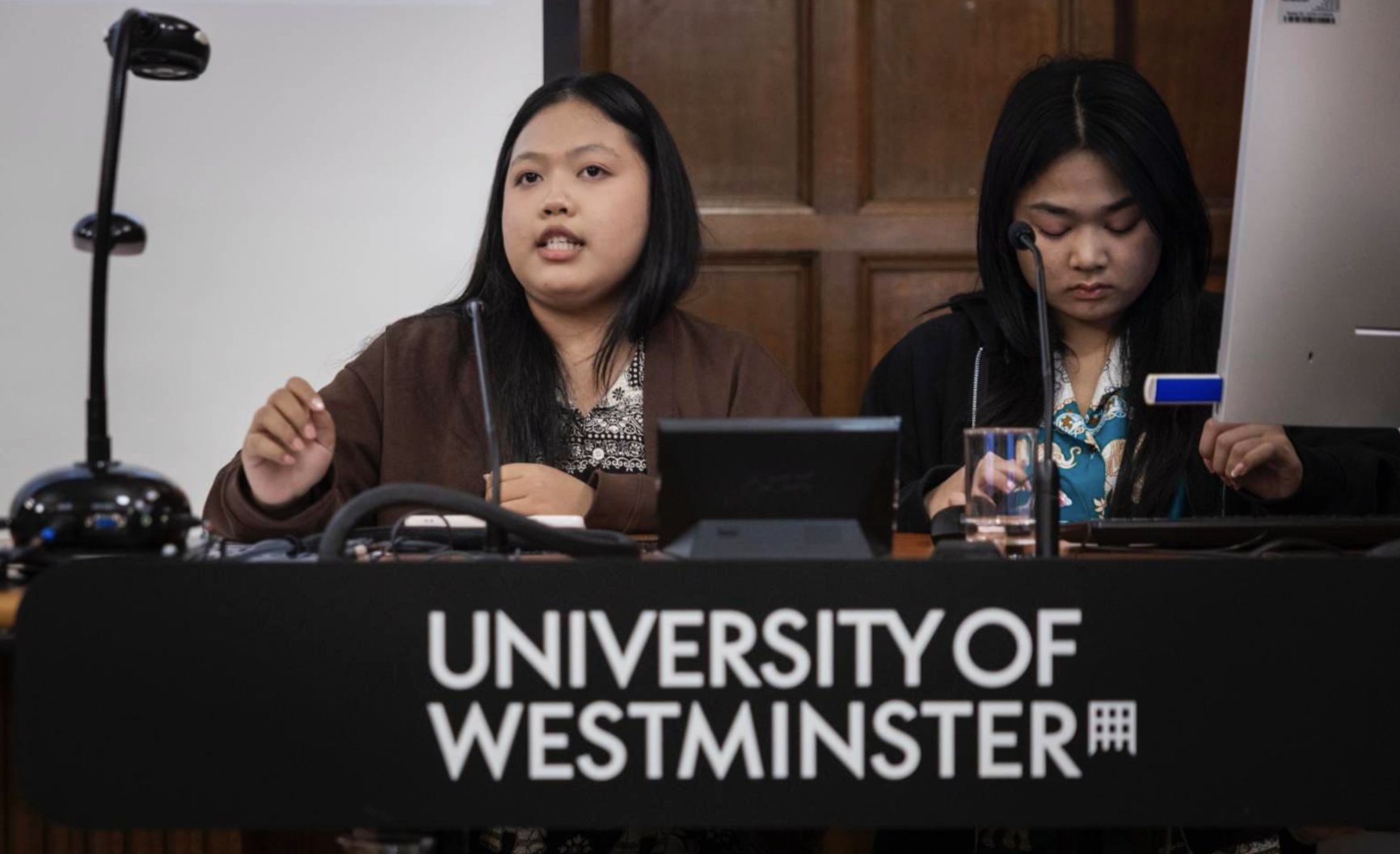
What made DEN valuable was the range of people in the room. Students had traveled from Poland, Thailand, the United Kingdom, and elsewhere — each presenting research shaped by very different contexts and priorities. Sitting with peers who are working on substantive problems from corners of the world you have never visited does something useful: it shows you both how much overlap there is in the questions people are asking, and how differently those questions look depending on where you are standing. That is not something you get from reading papers alone.
The conference functioned as a genuine platform for knowledge exchange — not just between presenters, but in the conversations that happen around the edges of a well-organised event. I came away with a clearer sense of the research landscape my generation is navigating, and with contacts I intend to keep.
The Presentation

At the conference, our group presented on a topic we had been developing for some time: “The Silk Road Never Ended – It Just Went Digital.” The argument was straightforward — Uzbekistan has always been a country defined by connectivity, sitting at the intersection of major trade and cultural routes. What has changed is the medium. Today, that same geographic and strategic position is being reimagined through IT infrastructure, digital platforms, and AI. Making that case to an international audience, and having it received seriously, was one of the more meaningful parts of the trip.
London As An Observation

Outside the conference, the city itself offered a few things worth noting. What struck me most about London was not its scale but its relationship with its own history. The city does not erase its past to accommodate the present — old buildings are preserved, incorporated, lived in alongside modern ones. For someone from a country that is currently rebuilding and modernising at significant speed, that approach to urban identity raised questions worth sitting with.
I also paid attention to how the city treats education outside the classroom. In virtually every museum and public space we visited, there were school children on structured visits with their teachers — not as an occasional enrichment activity, but as a routine part of how young people are educated there. The idea that learning should involve direct encounter with real things, real places, and real history is something I found worth reflecting on.
A Note Of Thanks
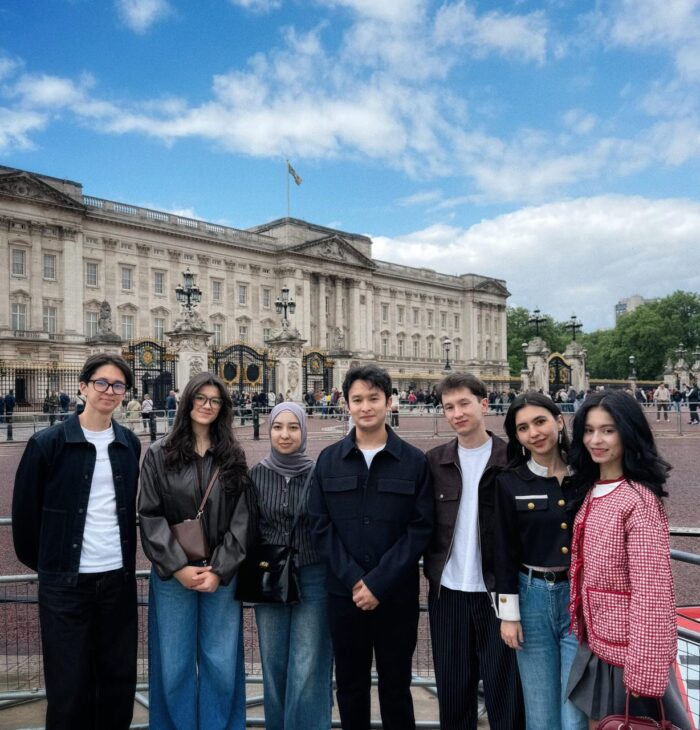
None of this would have happened without the people who made it possible. I am grateful to Meyirbek Abdikadirov, SDG course coordinator, for his guidance and organisation throughout. To my fellow travelers and SDG course winners from Westminster International University in Tashkent — Mekhrangiz Khoshimova, Orasta Jumaeva, Bakhrom Murodkosimov, Sarvarbek Ramatov and Madina Rajabova — it was a privilege to represent our university alongside you.
A genuine thank you also to the University of Westminster students who accompanied us through London and made the experience what it was: Negena Mahmoud, Salman Aziz, Ariadna Lemos De Oliveira, Afra Bhuiyan, Ahmed Abdirahman, Konrad Leutert, Michelle Mohaimen, Senya Hamlin, Sumayyah Syed and Margarita Andreieva. Their generosity with their time and their city made all the difference.
And of course, to Dr. Farhang Morady — thank you for the invitation, and for creating the kind of academic environment where this sort of exchange is possible.
Jasmina Boymamatova

That sounds like an incredible experience! I’ve always been fascinated by how conferences can foster such a tight-knit community.