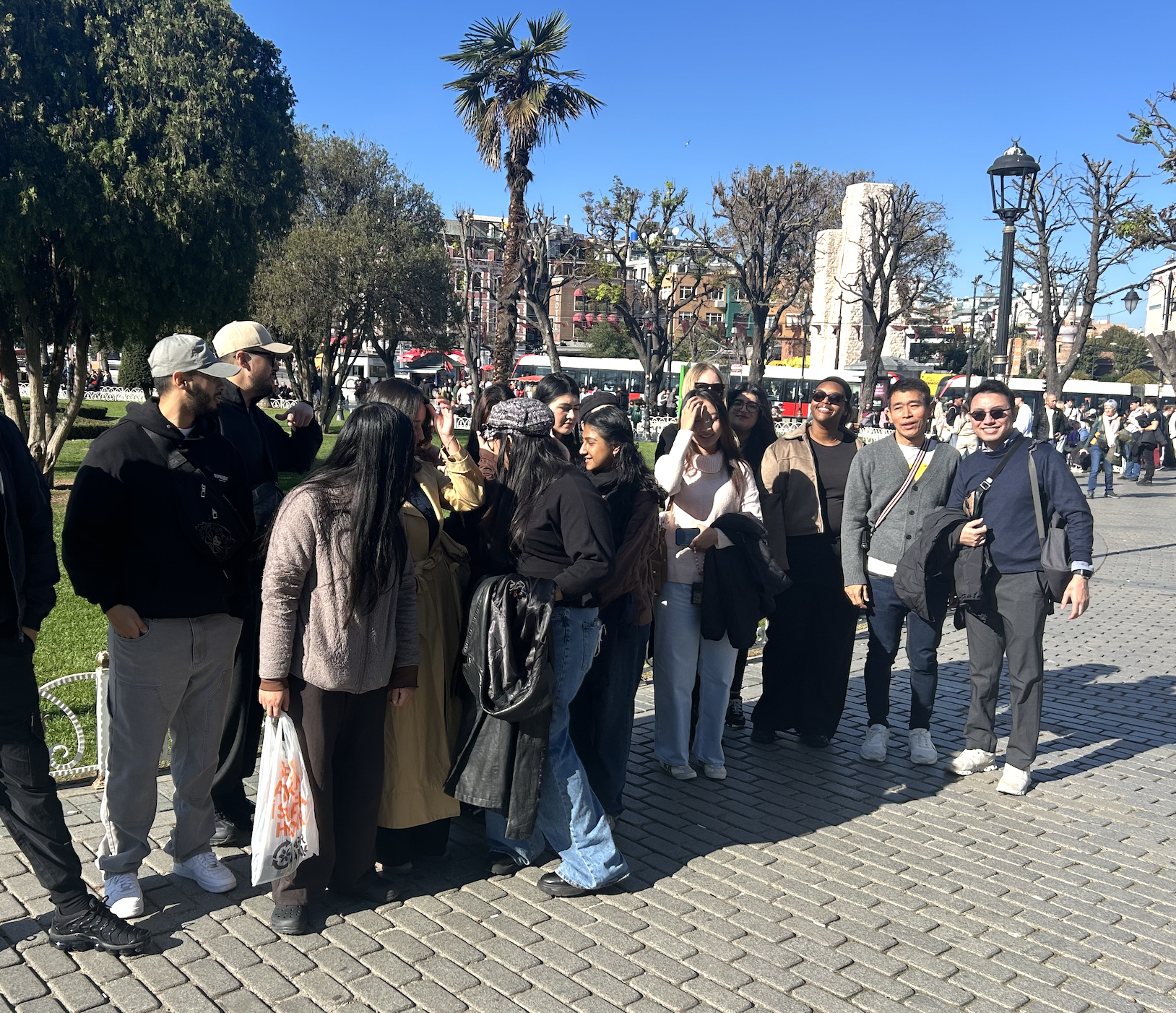
Before visiting Turkey, my imagination was filled with familiar images: the domes and minarets of Istanbul, bustling bazaars perfumed with spices, and the shimmering Bosphorus, which links Europe and Asia. These iconic scenes often dominate global narratives about Turkey, presenting it as a bridge between East and West, tradition and modernity. Yet these images, while evocative, only skim the surface. Arriving in the country revealed a far more complex and dynamic society shaped by competing visions of development, identity, and democracy.
One of my primary objectives in visiting Turkey was to gain insight into how ordinary people navigate these tensions. The country’s rapid economic transformation, particularly since the early 2000s, has led to impressive infrastructure, expanding middle-class consumption, and globally connected cities. Yet alongside these achievements are rising economic pressures, regional inequalities, and a growing sense of social polarisation. Exploring Istanbul made visible how neoliberal reforms, urban redevelopment projects, and changing labour markets have reshaped everyday life, offering opportunities for some while generating precarity for others. Witnessing these contrasts firsthand allowed me to appreciate the lived realities behind development statistics. Despite these developments, the lecture at Istanbul Kultur University mentioned that Turkey faces numerous problems in the employment sector today. Namely, that unemployment rate amongst young people is rising, and women are severely disadvantaged in both society and in their workplaces.
Being in Turkey also reshaped my understanding of broader concepts like modernisation, nationalism, and globalisation. Modernisation here is not a linear transition from ‘traditional’ to ‘Western’, but a hybrid process in which Islamic values, consumer culture, and technological innovation coexist and interact. Nationalism, too, appears multifaceted, encompassing both secularism and national unity, as well as newer forms of religiously inflected identity. Globalisation is evident not only in the presence of international brands and foreign investment, but also in cultural flows, migrant communities, and Turkey’s strategic geopolitical role. Seeing these forces intertwined in daily life underscored the inadequacy of rigid theoretical categories.
Several aspects of Turkish life particularly captured my interest. The education system, for instance, illustrates debates about secularism, access, and the role of religion in public institutions. Gender dynamics, evident in workplace participation, family structures, and political activism, underscore ongoing struggles for equality. The relationship between religion and public life fascinated me, especially the ways in which piety and consumerism intersect in urban spaces. Finally, observing the economy at street level, small businesses, informal labour, and tourism offered insights into how global and domestic pressures intersect.
Kulsuma Miah