Education goes beyond traditional classroom education, according to my lifelong belief. My first year as a psychology undergraduate and membership in the Democratic Education Network (DEN) have taught me that learning happens through life experiences alongside dialogue, real-world interactions, book-based learning, and lectures. The upcoming May will provide me with my first chance to verify my belief when I join my classmates for a New York City journey to discover historical sites, diplomatic operations, sustainability practices, and the essence of global citizenship.
The planned educational adventure is much more than an organised schedule. It embodies DEN’s three core principles of student-initiated learning with international teamwork and academic involvement in real-world settings.
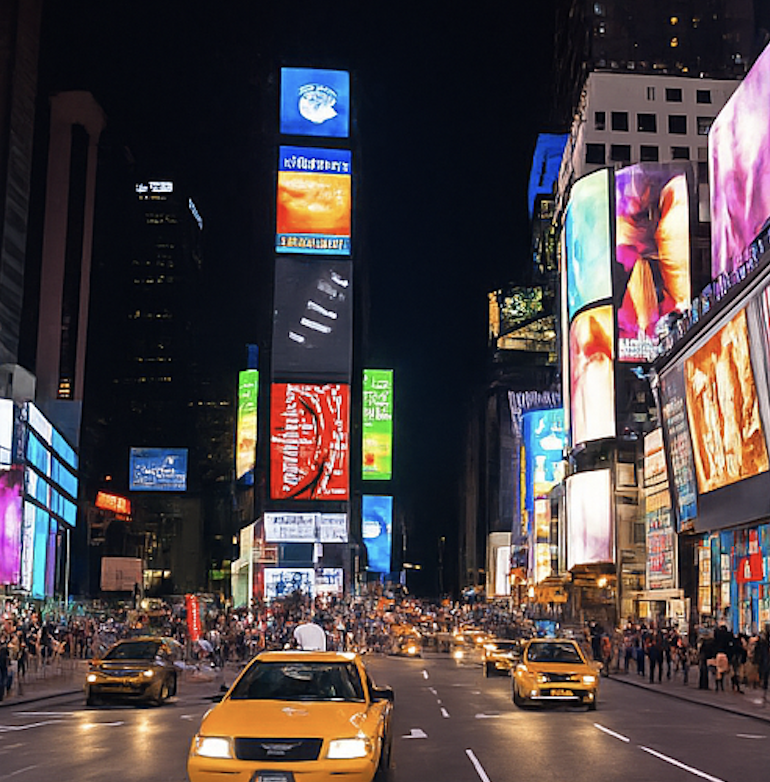
Upon our first day of arrival, we will stay at the Motto by Hilton Hotel, which stands in the middle of Times Square. The excitement has already begun to build because experiencing such a world-renowned location seems like a dream. Times Square originally served as Longacre Square before becoming the current vibrant digital and cultural crossroads. New York City demonstrates its ability to adapt through time as its transformation showcases its dynamic nature and constant flow of new ideas.
The second day will start with Scott Lackey guiding us through a walking tour that shows how Manhattan’s history has accumulated across different neighbourhoods, including Wall Street and Washington Square Park. Stone Street holds a special meaning, because it was first paved by Dutch settlers in 1658. This area carries residual impressions of colonial-era trade activities alongside scenes of urban protests and multiple historical layers. The site at Battery Park City draws me because I study how physical settings affect human conduct, and this development arose from the 9/11 debris. The facility has evolved into a worldwide benchmark for environmentally friendly urban development. The site transition from destruction to trauma to resilience to innovation represents a profound psychological transformation where painful memories are converted into significant areas.
On our third day, we will visit the United Nations Headquarters, which promises life-changing experiences that I cannot predict. The UN is an active and complex body that negotiates peace and human rights alongside climate change and development issues. My interest in understanding power structures and systems drives me to experience the UN’s General Assembly and Security Council Chambers because these spaces directly influence global cooperation. The experience shows that diplomacy exists in human terms through political processes from which students at our level can derive knowledge and make meaningful contributions.
Our fourth day takes us to the Metropolitan Museum of Art, a space I imagine will feel like walking through a miniature world. Two million works of art from five thousand years of human history reside in this institution, which safeguards memory and culture through all artefacts. I am most excited to see the Temple of Dendur, which the Egyptians moved stone by stone to New York for display. The temple’s movement is a testament to how heritage and history accompany people while art enables memory preservation through time and across spatial boundaries and linguistic barriers. My approach to the visit will be unhurried so I can observe and think while allowing myself to absorb everything fully.
During our last morning in New York, we will spend time alone before departing home. SoHo represents a South-of-Houston Street location that combines historic buildings with an active artistic atmosphere. I wish to experience this last moment by taking a casual walk through SoHo or by sitting in a café to observe people while allowing the urban spirit to imprint itself as a permanent memory of the city.
This trip is more than a visit. It’s a lived experience that combines everything I believe about education, identity, and global citizenship. Every destination holds lessons beyond narratives while sharing its message through various experiences. Every place provides more than a story because it teaches valuable lessons. The psychological aspect of this trip will allow me to study how people, along with cities, remember, adapt, rebuild, and grow.
References
Democratic Education Network. (2025). History and Evolution of New York City: Field Trip Presentation.
Democratic Education Network. (2025). Exploring Downtown Manhattan: Field Trip Presentation.
Democratic Education Network. (2025). Introduction to the United Nations Headquarters in New York: Field Trip Presentation.
Grace Villagomez-Akre