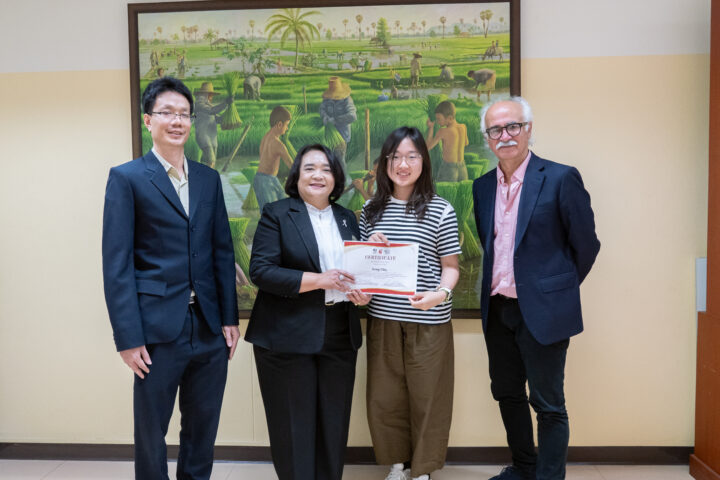
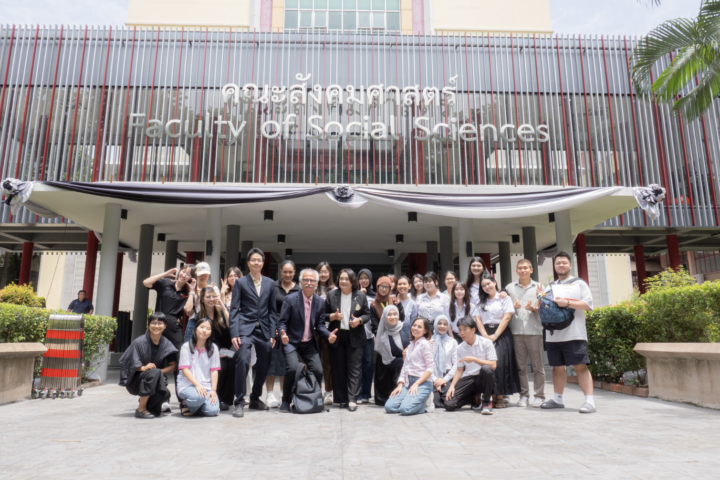
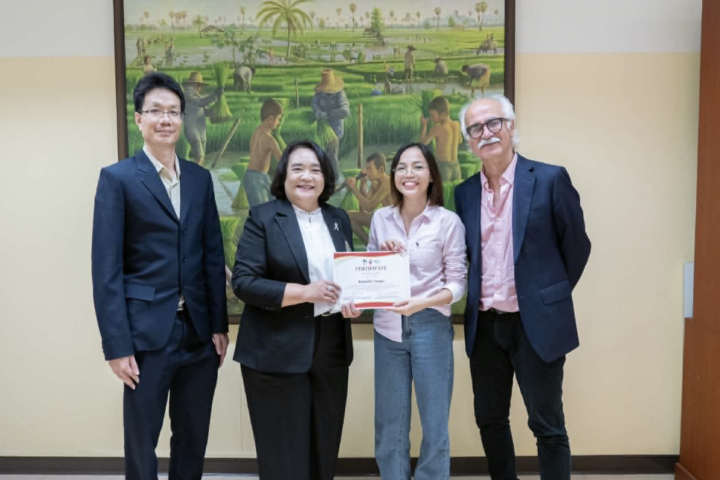
The SOC-ENVI International Summer School 2026 was hosted by the Faculty of Social Sciences at Kasetsart University, Bangkok. It ran for a fortnight in July 2026 and brought together undergraduate and postgraduate students and academics from Indonesia, Vietnam, the Philippines, Hong Kong, China, and the United Kingdom to work on sustainability, social innovation, and community-based development, both in the classroom and in the field.
This was my first academic programme abroad. I arrived from Palembang expecting to learn about global sustainability. I left having learned that the most useful solutions are often the smallest ones, and that they only work when a community is inside them
Stepping outside my comfort zone
Participating in the SOC-ENVI Kasetsart University International Summer School 2026 has been one of the most memorable academic experiences of my life. Although I had travelled to several cities in Indonesia, this was my first academic programme abroad.
Being surrounded by participants from different countries was both exciting and daunting. I had to adapt to a new culture, a new learning environment, and to perspectives I had not encountered before. As the fortnight progressed, I realised that every challenge was also an invitation: to step outside my comfort zone, to reflect on what I was carrying, and to keep improving. By the end, I was more confident in my ability to learn, collaborate and contribute in an international setting.
Theory that met practice
One of the things I appreciated most was how carefully the programme balanced theory and practice. We worked through the Sustainable Development Goals, sustainable development, social innovation and community-based development in interactive lectures and discussions. The learning was enriched with quizzes, case studies, group work and presentations, all of which encouraged critical thinking, teamwork and the exchange of ideas.
Rather than simply receiving knowledge, we were asked to participate in shaping it, and to propose solutions to real sustainability challenges. That single move, from receiver to contributor, changed how the whole fortnight felt.
What Phetchaburi taught me
The field activities made the learning experience more meaningful still. In Phetchaburi Province we visited the Laem Phak Bia Environmental Research and Development Project, known as LERD, and saw how the approach is implemented through community participation. Back in Bangkok we visited the Atmospheric Monitoring Tower at Kasetsart University, and learned how scientific data is used to monitor air quality and support environmental policy.
These visits changed the way I think about sustainability. I realised that solving environmental problems does not always require sophisticated technology or expensive solutions. Through the LERD approach, I saw that simple, locally-grounded solutions, supported by active community participation, can create meaningful and long-lasting impact. Innovation is not only about developing advanced technology. It is also about making the best use of local resources in sustainable and practical ways.
“Innovation is not only about developing advanced technology. It is also about making the best use of local resources in sustainable and practical ways.”
A river we all knew about
The most memorable piece of work for me was our final group project. We were asked to identify a sustainability issue and design a solution informed by the LERD approach. Our group chose the Citarum River, one of the most polluted rivers in the world. Throughout the project, we exchanged ideas, argued through different perspectives, and built a solution together before presenting it to lecturers and international participants.
Working on it taught me that meaningful solutions are built through collaboration, open communication and mutual respect for opinions that differ from your own. A river as complicated as the Citarum cannot be understood, let alone helped, by one person alone.
Diversity as a strength
Beyond the formal sessions, interacting with participants from different countries became one of the most valuable parts of the programme. Despite our different cultures, languages and starting points, everyone respected one another, remained open to new ideas, and supported one another throughout the fortnight. Those interactions broadened my perspective and reminded me that diversity is not a difficulty to be managed. It is a strength that quietly encourages innovation and cooperation.
What I carry home
This Summer School offered far more than academic knowledge. It inspired me to think critically, to embrace collaboration across cultures, and to recognise that meaningful change begins with small but consistent actions.
I hope the knowledge, values, and experiences I gained will not only support my own academic and professional journey but also help me encourage my community in Palembang to keep learning, take up opportunities, and contribute to a more sustainable future.
I sincerely thank everyone who made this programme possible. The lessons, friendships, and memories from this Summer School will continue to motivate me to make positive contributions wherever I am.
About the author
Tri Wahyuni is a Development Economics student at Universitas Sriwijaya, Palembang, Indonesia. She joined the SOC-ENVI Kasetsart University International Summer School in July 2026 as part of the Universitas Sriwijaya cohort.