
By Najia Benhamza, University of Westminster
In this blog, I refer to Ceuta as “Sebta,” reflecting its Arabic name.
As a Moroccan, my heritage matters deeply to me. We have a rich culture and a long history, but our country has also lived through colonisation and its aftermath. A clear example is the case of Sebta and Melilla.
Both cities sit in northern Morocco: Sebta near Gibraltar, Melilla near Nador. Both have a rich Moroccan history. So why are they still governed by Spain? And why does their status remain contested between Morocco and Spain?
The short answer is that Spain conquered Melilla in the 15th century and Sebta in the 17th. When Morocco gained its independence in 1956, Spain refused to return the two cities. They became “enclaves,” and today they remain on Spanish soil in Africa.
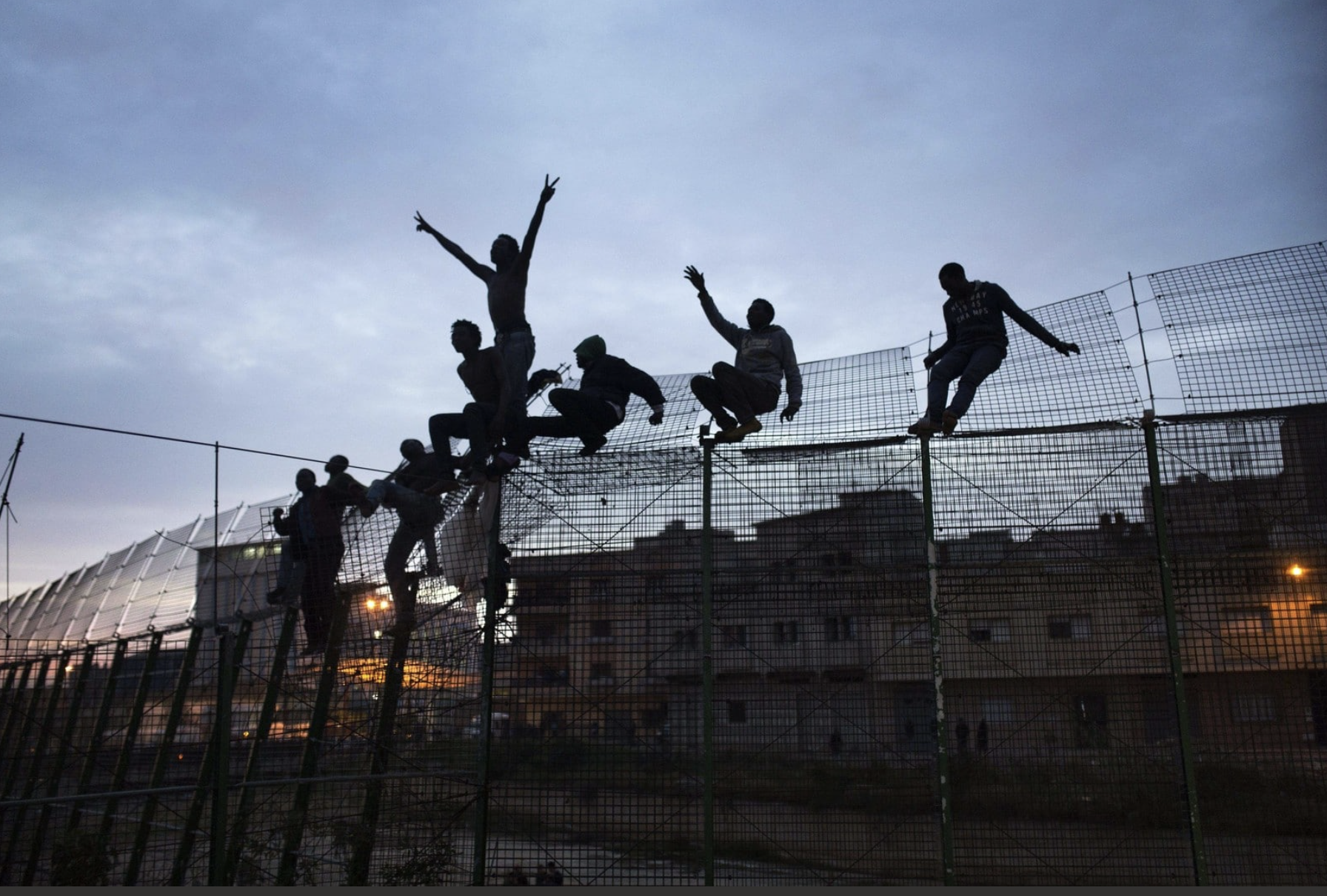
The border infrastructure around Melilla is where European migration policy becomes physical. According to Amnesty International, the 11.2 km land border is surrounded by layered fencing, concrete walls, ditches and barbed wire, and monitored by heavy surveillance and border-control systems. This is not ordinary border security. It is European migration policy hardened into steel, cameras and stone, and built on African land.
The crossings into Sebta and Melilla happen constantly, and no single group dominates. Many are people seeking international protection. Others are people who can see no economic future at home. The crossings are dangerous, and many who make it face declining health and homelessness on the other side.
A good example is the 2022 Melilla mass crossing. According to reports, at least 37 people were killed, and around 70 remained missing. There are accounts of Spanish and Moroccan border officers striking people with wooden sticks as they climbed the fence, and of some falling and dying as a result. This is the human cost of securitising a piece of land that was taken and never returned.
Sebta and Melilla have changed how I see borders. If a border can separate two political spaces while they sit on the same continent, what does that tell us about how we understand Europe, Africa, and belonging?

Such an interesting topic! It never seems to be discussed from the Moroccan perspective either, and I think we really need to change that.