
By Ribana Cristescu· Democratic Education Network, University of Westminster
What happens when a diverse room of curious students gathers, not out of obligation, but out of a shared desire to make a genuine difference?
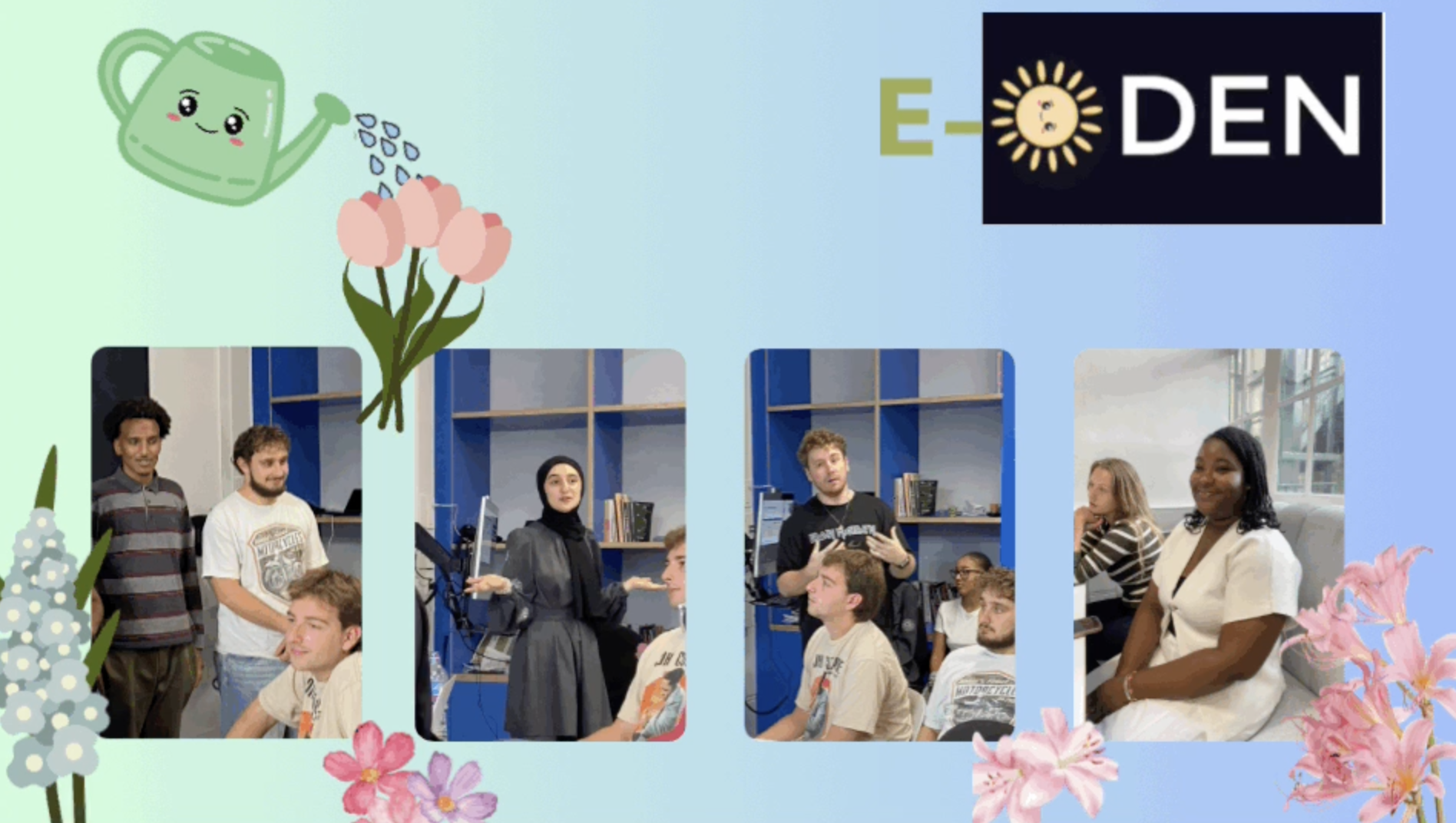
Today I took part in the first in-person meeting of the Democratic Education Network (DEN) at the University of Westminster for the new academic year. As DEN celebrates its milestone 10th anniversary, entering this collaborative space felt particularly meaningful.
What struck me most was not simply what we discussed, but the room’s dynamic: what happened between us, the participants, as the afternoon unfolded.
We arrived as students from different campuses, disciplines, backgrounds and stages of study. Some already knew DEN well. Others, like many newcomers entering any unfamiliar room, began with that slight hesitation that accompanies introductions between strangers.
Two hours later, the atmosphere looked completely different. There was conversation, laughter, curiosity, storytelling and the beginnings of new connections.
That transformation made me think about something fundamental to both education and human development: the relationship between challenge and safety.
Growth rarely happens when everything feels completely comfortable. Too little challenge can lead to stagnation, while overwhelming pressure can make people withdraw rather than participate. Somewhere between the two lies a space where we feel sufficiently safe to experiment, make mistakes, ask questions and try something unfamiliar.
That is one of the things I find particularly valuable about DEN. Students can contribute in many ways. They might write blogs or articles, contribute to publications, chair meetings, take minutes, deliver presentations, facilitate activities, organise events, or simply begin by listening and observing. Some roles play out visibly on a stage. Others happen quietly, behind a notebook. Yet each offer something important: an opportunity for self-discovery and development.
We often discover our strengths not by thinking about what we might be capable of, but by being given a safe opportunity to try.
At the beginning of the session, we had the privilege of hearing reflections from our Vice-Chancellor, Professor Peter Bonfield, and Deputy Vice-Chancellor, Professor Dibyesh Anand. The Vice-Chancellor spoke about the importance of creating a university environment in which students feel safe, seen and heard, and where they belong.
Professor Anand then reflected on the philosophy from which DEN emerged. At its heart lies the idea that education should not simply be the passive reception of information. It should be a dialogue. A democratic learning environment creates space for people to question assumptions, acknowledge what they do not know, contribute what they do know, listen to perspectives different from their own, and recognise the strengths that others bring. It is a space where hierarchy disappears and conversation opens up. Learning becomes something we create with one another, rather than something delivered in only one direction. Equally important, it encourages us to move away from seeing education purely through the lens of competition, and towards recognising what can happen when people choose to thrive collectively.
The session began with the natural awkwardness that often appears when people who do not know one another share a room. Then came the icebreakers. Conversation became easier, and laughter appeared. Names began to attach themselves to stories and personalities, rather than simply to faces. We heard experiences from students who had already been part of DEN, and received valuable guidance from our mentor, Farhang Morady. We also watched an inspiring video from a fellow student reflecting on her DEN journey, from her first involvement to where that experience eventually took her. Each contribution added another layer to our understanding of what a student community can become when people are encouraged not simply to attend, but to participate.
One of my strongest reflections from the afternoon came from thinking about the world outside that room. We are living through extraordinary technological change. AI can generate content, algorithms can organise information, digital systems can optimise workflows, and technology allows us to communicate across geographical boundaries almost instantly.
Yet being in that room reminded me of what remains deeply human. The smile that reassures someone unsure whether to speak, and the laughter that suddenly dissolves awkwardness. The person who listens rather than simply waits for their turn to talk, and the willingness to admit, “I don’t know.” The trust required to share an unfinished idea, and the small gestures that say: you are welcome here.
Technology can support human connection, but it cannot easily reproduce the quiet magic through which warmth begins to melt the invisible barriers between strangers. That transformation happened in front of us during the afternoon.
Looking around the room and seeing students from different campuses and faculties made me think of DEN as something more than a network. I saw an E-DEN: a garden of ideas that share the same soil. A thriving community where we water one another’s confidence and occasionally help pull out the weeds created by doubt, fear or misunderstanding, and where, with enthusiasm, we create enough light, through encouragement, positivity and opportunity, for each person’s ideas to grow.
As DEN enters its tenth year, the meeting concluded not only with celebration but with reflection. We were invited to think about the future, and specifically, what should DEN become next? And how will each of us contribute to that future?
Belonging to a community cannot only be about asking, “What can I gain from being here?” It also requires asking, “What can I bring that will make the community stronger? What might help somebody else grow?”
Strong communities begin not with identical people, nor with perfect ideas, nor even with complete confidence. They grow with individuals willing to enter the room, listen, contribute, experiment, support one another, and gradually discover what they can build together.
We left the session with plenty of food for thought, some wonderful new connections, many ideas still waiting to grow, and some snacks and treats shared with smiles and thanks.
Ten years after DEN began, the most exciting question is not simply what it has already achieved but what it will become over the next decade. I can’t wait to see.



This was so beautifully written it felt like poetry!