

A reflection on trust, water and ‘whose voice is missing’ from the SOC-ENVI International Summer School 2026.
By Kong Yilin (‘Elaine’) · Peking University, Beijing, China.
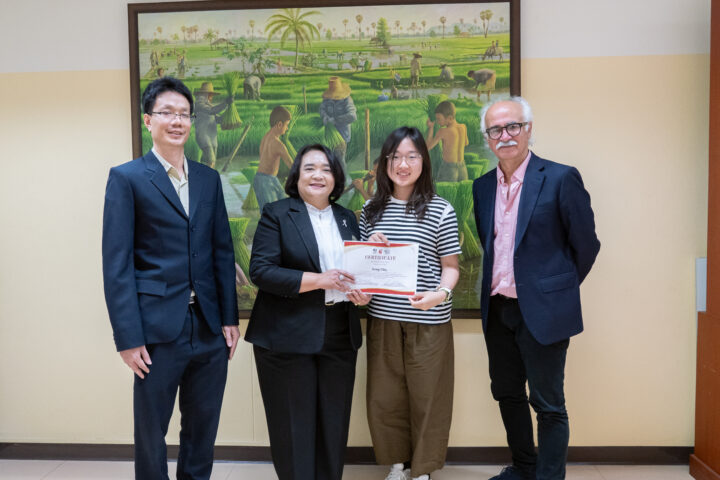
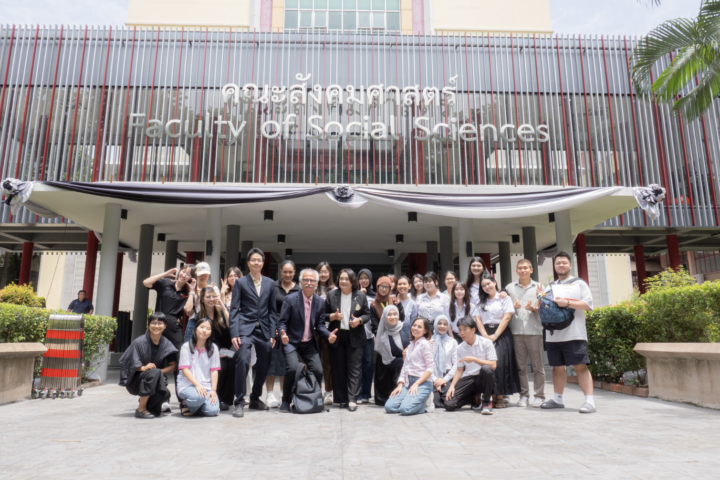
The SOC-ENVI International Summer School 2026 was hosted by the Faculty of Social Sciences at Kasetsart University, Bangkok, in partnership with the Democratic Education Network at the University of Westminster, London. It ran for a fortnight in July 2026 and brought together undergraduate and postgraduate students from China, Indonesia, Vietnam, the Philippines, Hong Kong and the United Kingdom to work on sustainability, social innovation and community-based development, in the classroom and in the field.
Before I arrived in Thailand, the travel guides all said the same thing: do not drink the tap water. Two weeks later, a single ordinary object, a bottle of water, had reshaped the way I think about sustainability, trust, and whose voice is missing from the questions we usually ask.
A traveller’s habit
Before arriving in Thailand, almost every travel guide I found on Chinese social media gave the same piece of advice: do not drink tap water. After I arrived, this recommendation seemed to be confirmed everywhere. The university always prepared bottled water for us, and the hotel provided bottled water every day. Within a few days, carrying a bottle of water became an unconscious habit.
At first, I thought of it as nothing more than practical travel advice. Yet as the summer school continued, I found myself paying more attention to something I had rarely questioned before: why do we trust some water but not others?
What LERD taught me about water
Water gradually became a recurring theme throughout the programme. During our visit to the LERD (Laem Phak Bia Environmental Research and Development) Project, I learned how wastewater can be treated using natural systems such as mangrove forests and constructed wetlands instead of relying only on expensive engineering infrastructure. What impressed me was not only the technology itself, but also the idea that environmental protection, public health and local communities could be connected through sustainable solutions.
Beyond the tap
Later, our discussions expanded beyond Thailand. We learned about communities in Indonesia where many people continue to live with polluted and unsafe water because they simply do not have safer alternatives. Compared with my own concern about whether tap water was safe to drink, this case reminded me that for many people, the issue is not choosing between bottled and tap water. It is whether safe water exists at all.
These experiences made me realise that access to clean water, one of the goals of SDG 6, is much more complex than I had imagined. It is not only a question of infrastructure but also of inequality, governance, and environmental justice.
Adinda’s mineral water
An unexpected conversation with Adinda, one of my Indonesian classmates, deepened this reflection even further. Although the university and hotel both provided bottled drinking water, she rarely drank it. Instead, she always bought bottled mineral water from convenience stores. When I asked why, she explained that she believed mineral water was healthier and of higher quality.
Her answer surprised me. In my mind, bottled water was already ‘safe.’ I had assumed that once safety was guaranteed, everyone would make the same choice. I realised that our understanding of ‘good water’ is shaped by our own experiences, cultural habits and levels of trust. Even among students living in exactly the same environment, we carried very different assumptions into our daily decisions.
“Even among students living in exactly the same environment, we carried very different assumptions into our daily decisions.”
Whose voice is present, and whose is missing?
This also made me think about one question raised repeatedly during the summer school: whose voice is present, and whose is missing? Before coming to Thailand, my understanding of local water was mainly based on Chinese travel websites. During the programme, I listened to researchers explaining ecological restoration and learned about environmental challenges in Indonesia. I also heard my classmate’s personal perspective on drinking water. Yet I noticed that I still knew very little about how ordinary Thai families think about tap water. Do they avoid it in the same way that visitors do? Or has my understanding been shaped mainly by the voices of tourists and institutions?
A new habit
Looking back, it is remarkable that one of the most meaningful lessons I learned during the summer school came from something as ordinary as a bottle of water. It reminded me that sustainability is not only about developing better technologies or writing better policies. It also requires understanding how different people experience the same issue in very different ways. Behind every everyday choice lies a story about trust, culture, inequality and access.
Back home, I will probably continue checking whether tap water is safe whenever I travel. But I will also carry a new habit: instead of accepting everyday practices as normal, I want to ask why they exist, whose experiences they reflect, and whose experiences I have not yet heard. For me, that curiosity may be the most valuable thing I have gained from this summer school.
About the author
Kong Yilin, who writes under the name Elaine, is a student at Peking University, Beijing, China. She joined the SOC-ENVI Kasetsart University International Summer School in July 2026 as part of the Peking University cohort.

That’s a really interesting point about missing voices – it’s so easy to overlook those perspectives when focusing on the big picture of water issues.