From a student conference win in Tashkent to MSc Economics at the University of Bonn, by way of DEN
Durdonabonu Davronova, BSc Economics with Finance, Westminster International University in Tashkent (WIUT), Uzbekistan; now MSc Economics student, University of Bonn, Germany
Part of the Inside Westminster anniversary series marking ten years of the Democratic Education Network.
* * *
How did you first come into contact with DEN?
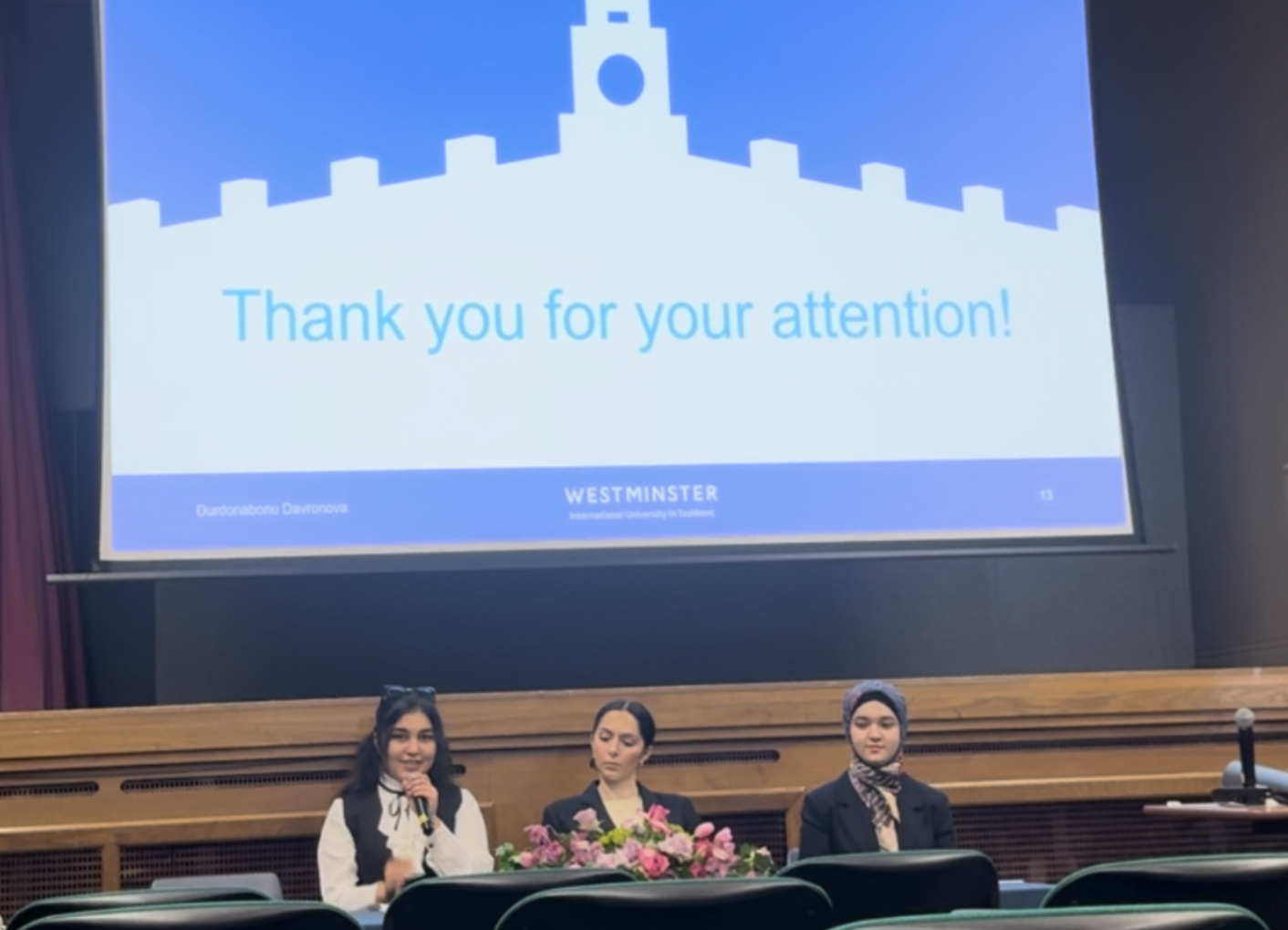
My first encounter with DEN came through a student research conference during my undergraduate studies at Westminster International University in Tashkent. I participated in the conference, presented my research, and was fortunate to win. That experience became a turning point in my academic journey, as it opened the door to opportunities beyond Uzbekistan, including engagement with the University of Westminster in London and the wider Democratic Education Network.
What drew me in was DEN’s commitment to student-led research, international collaboration, and creating platforms where students can share their ideas, publish their work, and learn from one another across borders. As someone passionate about economics and research, I immediately felt that DEN was a community where I could grow both academically and personally.
Which DEN activities have you taken part in?
I have contributed research and written work to the DEN annual book, presented at the DEN conference in London, and taken part in collaborative research, including peer reviewing student papers and joining academic discussions with students and academics from different countries.
Was there a moment at DEN that has stayed with you?
One moment that has stayed with me was receiving constructive feedback on a research topic I presented at DEN. Rather than simply pointing out weaknesses, the feedback challenged me to think more critically about the broader implications of my work. It taught me that good research is not only about finding answers, but also about asking better questions.
What aspects of DEN have had the biggest impact on you?
The biggest impact of DEN was helping me realise that research was not simply an academic interest, but the career path I wanted to pursue. After completing my undergraduate degree, I began working as a Research Assistant at WIUT, where I was able to build on the skills I had developed through DEN. Since then, I have continued publishing research, presenting at international conferences, and pursuing postgraduate studies in Economics at the University of Bonn.
Looking back, DEN was one of the key experiences that transformed research from something I studied into something I wanted to do professionally.
How has DEN helped you develop personally?
DEN helped me become more confident in sharing my ideas and engaging in academic discussions. It encouraged me to step outside my comfort zone, present my work publicly, and collaborate with people from different backgrounds. These experiences improved my communication, leadership and critical-thinking skills.
Has DEN helped you with employability or professional development?
Absolutely. DEN provided opportunities to develop research, presentation, and academic writing skills that have been invaluable in my professional and academic journey. The experience of presenting at conferences, and of contributing to publications, strengthened my CV and helped prepare me for postgraduate study and research-oriented work. These experiences also played an important role in my transition from undergraduate studies in Uzbekistan to a master’s programme at one of Germany’s leading universities.
What is one thing DEN has given you that you would have struggled to find elsewhere?
A genuine international academic community. DEN created an environment where students are treated as contributors rather than simply learners. The opportunity to collaborate, publish, and exchange ideas across countries and institutions is something I would have struggled to find elsewhere as an undergraduate student.
What advice would you give to students thinking of joining?
Be curious, and do not be afraid to contribute. You do not need to be an expert to participate. DEN is a place where you can learn by doing, whether that means writing, researching, presenting, or simply engaging in discussion. The more you get involved, the more experience you gain.
What would you say to a colleague at another university?
DEN is a unique network that combines academic excellence with genuine collaboration. It creates opportunities for students to develop as researchers, writers and professionals, while connecting with an international community. It is a model of higher education that encourages active participation rather than passive learning.
Should DEN do anything differently in the next decade?
DEN has achieved a great deal over the past decade. Looking ahead, it could further strengthen connections between current students and alumni through mentorship initiatives. Expanding interdisciplinary collaborations and creating more opportunities for joint international research projects would also help the network continue to grow and evolve.
As someone who began my DEN journey in Uzbekistan, I would be especially excited to see more in-person engagement across the network. At WIUT, we would warmly welcome a DEN delegation in the future. It would be a wonderful opportunity for students in Uzbekistan to connect directly with members of the wider DEN community, share experiences, and strengthen the relationships that make the network so unique.
Anything else you would like us to know?
I am grateful to have been part of a community that encourages students to think critically, collaborate internationally, and pursue their ambitions with confidence.
* * *
Photo caption: “Presenting my research and engaging with international academic communities has been one of the most rewarding aspects of my journey with DEN.”