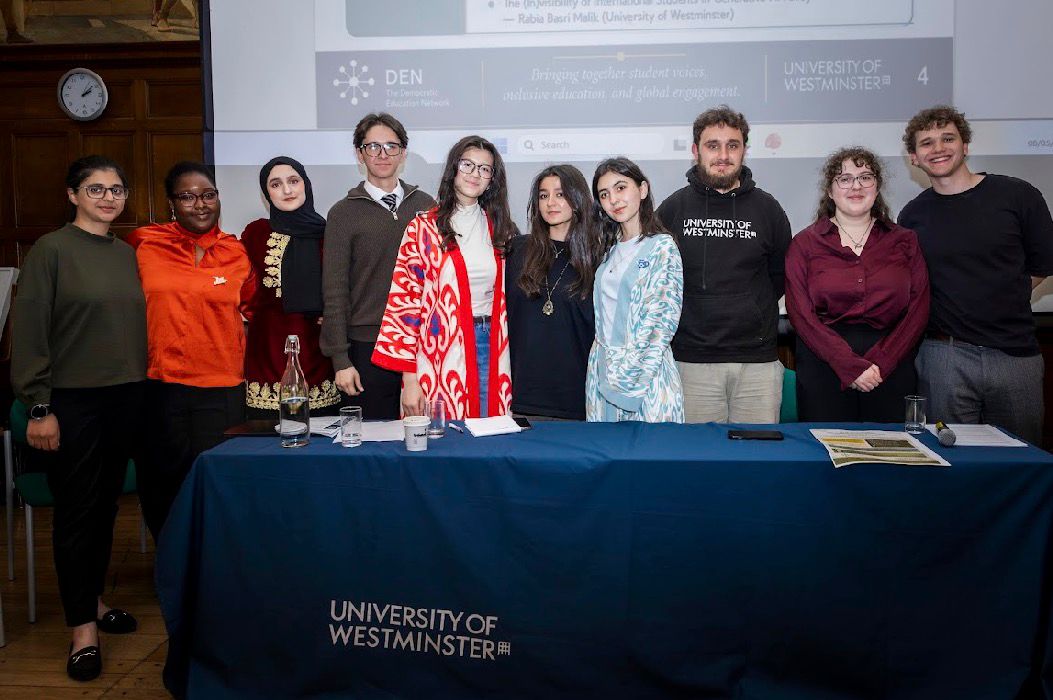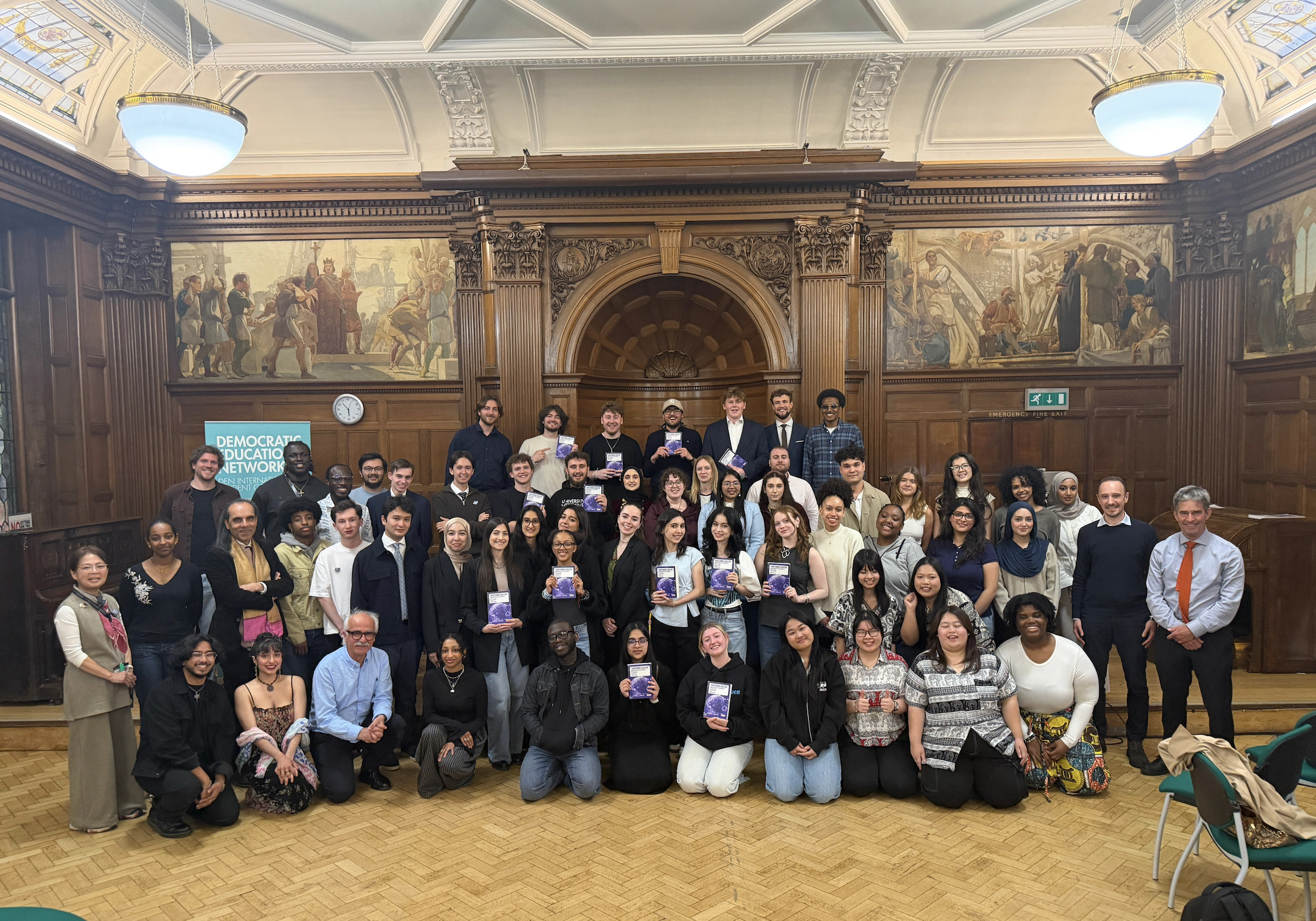
Between 4 and 10 May 2026, the Democratic Education Network (DEN) brought together students from across our colleges at Westminster and from partner universities in Thailand, Poland and Uzbekistan, for a week of learning.
The Summer School, themed Democratic Engagement in an International Context, was built around collaboration and peer learning. The programme included a student-led field trip, during which our students guided the international visitors through the City of London, taking in the Monument, the Bank of England, the London Stock Exchange, the Lloyd’s Building, Guildhall, St Paul’s Cathedral, the Millennium Bridge and Tate Modern. Together, they explored questions of history, urban development, economics, finance and multiculturalism. The visitors were also given a campus tour and introduced to DEN by their peers during a session titled Westminster in Context: University, City, and Students. In addition, an entire day of workshops, led by students, focused on civic education, student leadership, and transforming lived experience into public writing.
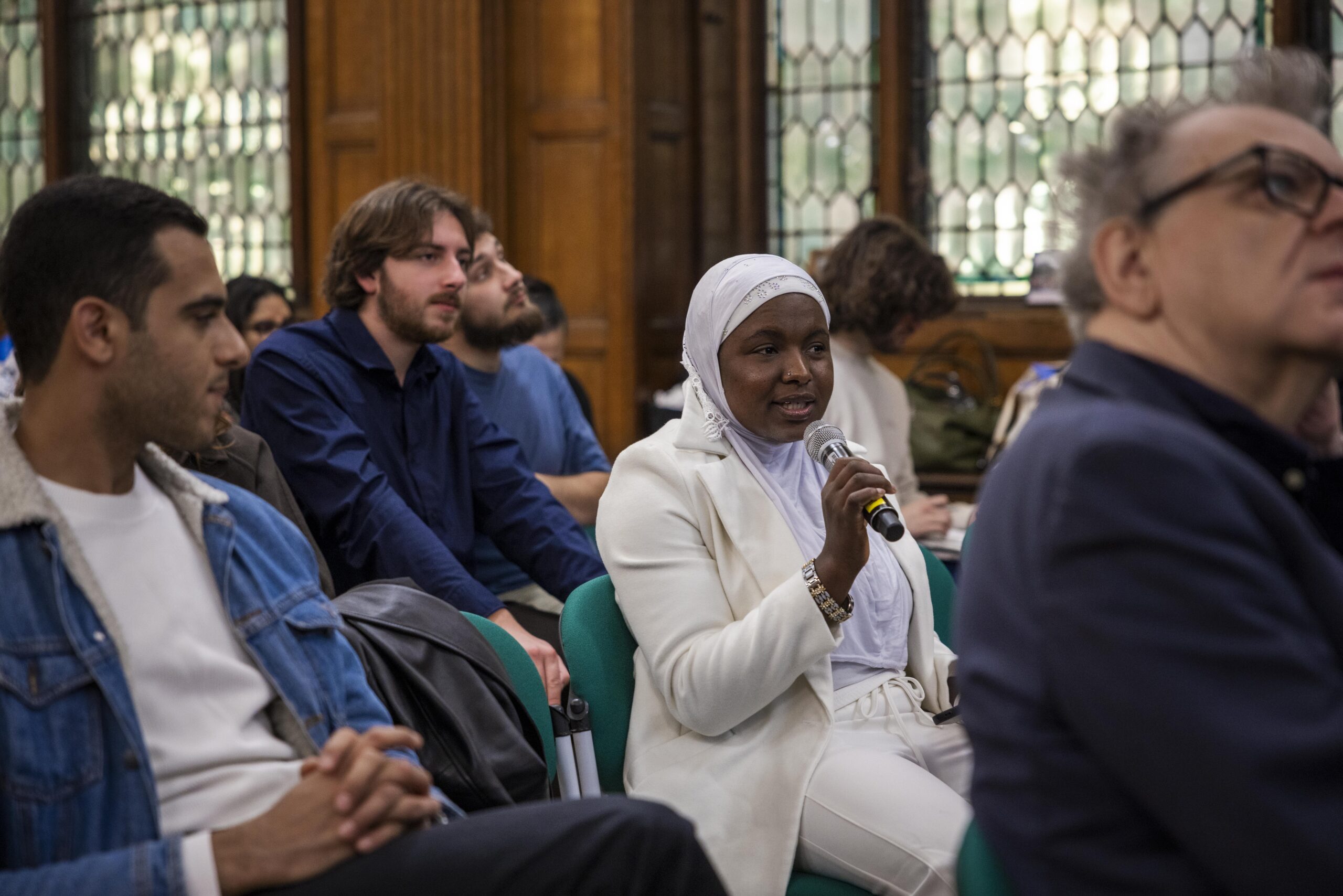
On Friday 8 May, the conference, titled Transforming Education: Innovation for Sustainability in the AI Era, brought the week to a climax of education, engagement, collaboration and celebration at Fyvie Hall. We were honoured to be opened by Vice-Chancellor Peter Bonfield, Deputy Vice-Chancellor Dibyesh Anand, Head of the School of Social Sciences Alan Porter, and Meyirbek Abdikadirov from our partner university in Tashkent. Thirty-five students then presented across six panels.
The day was strengthened by our partnership with Capital City College, London, which brought several of their students to engage with us. A dedicated AI in Further Education segment held at the college brought the college students into the conversation as full participants. This is what local engagement looks like in practice: a long-standing partnership in which college and university students learn from one another as equals. The wider community is not a backdrop to DEN’s work; it is at the heart of it.
The day closed with the launch of our 8th publication volume, featuring 20 student articles from across the world across 355 pages, reviewed and put together by students.
I always learn the most from listening to students afterwards. Rita Andreieva, a final-year student who presented, told us that “every participant brought a unique perspective to the discussions.” Konrad Leutert, presenting for the first time, valued “the chance to meet like-minded people from beyond Westminster.” Ribana Cristescu, a mature student, said the day “filled my heart with joy, hope, and inspiration.” And Rida Butt, presenting on impostor syndrome, captured something I think every academic should hear: “What I appreciated most was that it created space for honesty. It did not feel like a place where students had to appear perfect or have all the answers.”
What this week stood for
DEN began with a simple idea: that students learn best when they are partners, not recipients. Ten years on, the Summer School and Conference together show what this looks like in practice. Students collaborate across borders. They share their research openly. They build a community grounded in respect and care for one another. Democracy in education is not something we teach as a subject; it is something we practise together, every week, in every meeting, on every field trip and at every conference panel. And every voice that joins us makes the practice stronger.
I would like to thank the Vice-Chancellor for his support of DEN, and for the opportunity to share this reflection. Most of all, I want to thank the students, at Westminster, at our partner universities, and at Capital City College, who once again showed us what is possible when universities trust them to lead.
To find out more, visit democraticeducationnetwork.net and our online magazine insidewestminster.co.uk.
Farhang Morady