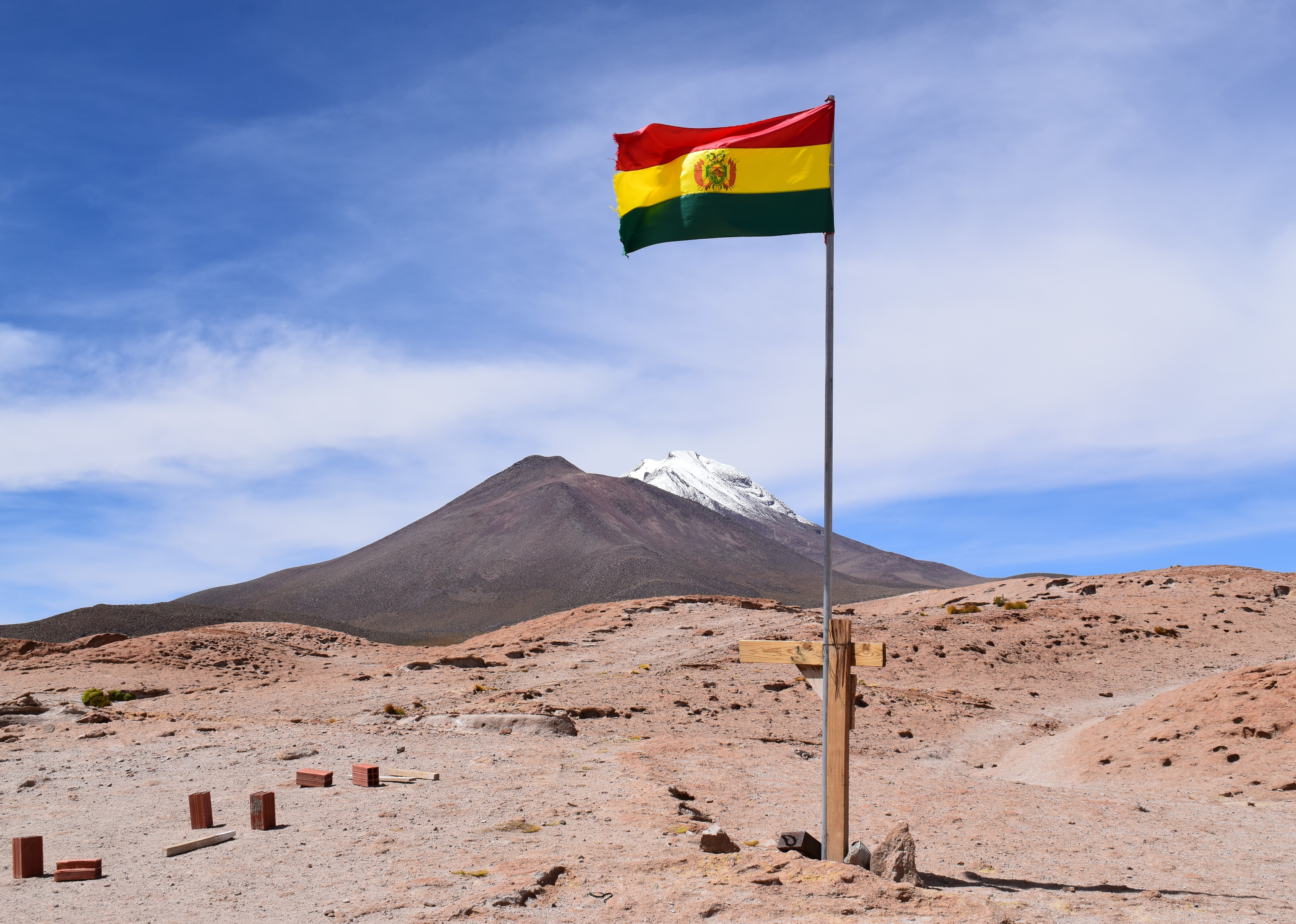
President Evo Morales, the second indigenous president of Bolivia since the first in 1829, in his 2006 inauguration stated that this new system will incorporate the Andean revolution, Simon’s Bolivar nationalism and Che Guevara’s socialism.[1] This came about after a negative response to the former neo-liberal economic policies of the previous government. In 2003, an...
Category: Academic Papers
BEFORE AND AFTER THE ARAB SPRING; TRANSFORMATIONS IN MUSICAL CULTURE
The world around us is as complicated as it was never before: it consists of multiple layers and multiple actors; but most importantly, it is always changing. This paper will be discussing a specific part of a broader change of a vast region during 21st century – the Arab Spring. In this paper, I will...
Are LGBT rights human rights? A queer perspective.
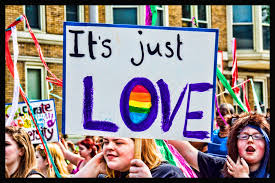
In this paper, I will argue that the framing of LGBT rights as human rights should be assessed on two different levels. Precisely I will argue that the use of human rights as an instrument to promote LGBT rights has positive effects in leading the fight against gender discrimination at the international level, often pushing...
Can left-wing populism revive social democracy?
This paper investigates the concept of populism, in particular in relation to the way in which left-wing traditional parties and new actors have (or have not) adapted to modern populist discourses in the light of the popular rejection of traditional institutions and parties. The aim of this paper is to establish whether left-wing populism can...
Is Inter- State war still the most important form of contemporary violence?
In the decades following the end of the Cold War, there have been fundamental changes in the use of violence around the world. We have seen a move away from the classical or ‘Clausewetzian’ type of interstate conflict and into the less easily defined areas of intrastate conflict. Added to this has been the rise...
Impact of Colonialism in Contemporary Development Trajectories
The earthquake that took place in Haiti in 2010 killing over 250,000 people (Ramachandran et al, 2013) opened the debate on how the preconditions of the country contributed to maximise the effects of the natural disaster. According to Dr. Matthias Garschagen (2016), the disaster potential was not only driven by the force of the natural...
Is politics a science?
“Politics, in its broadest sense, is the activity through which people make, preserve, and amend the general rules under which they live” (Heywood, 2015). People learn many things from different experiences and ways, for example, people understand that at a 212 degrees water boils, a virus called HIV causes AIDs. Similarly, people claim to know...
Are Human Rights Universal?
Since the establishment of the Universal Declaration of Human Rights in 1948, human rights have become deeply embedded in the structural order of the international arena. It comes as no surprise then, that it has fallen under stark scrutiny since its beginning. The declaration states the right to life, freedom from discrimination and equality under...
Is the State merely a Committee for Managing the interests of Elites?
The ‘State’ is somewhat of a nuanced term in the literal sense, yet the term is widely used to describe the role and actions of the government in power. The role of the state is something that has divided theorists across the traditional ‘left/right’ spectrum with regards to its role and its members (executive, legislature...
How does Castells define the ‘Network Society’? What are the advantages and limitations of the concepts for understanding current societies?
The extent to which technology and the internet have revolutionized our social structures is immeasurably evident. In the last few decades, technology has lost its old fashioned connotation as complex, impersonal machines and have instead become devices which deliver real and palpable features to the masses. The internet, in turn, provides endless sources of fun...