A reflective essay by Ribana Cristescu, a mature Cognitive and Clinical Neuroscience student and entrepreneur, on finding her place at DEN
Ribana Cristescu, BSc Cognitive and Clinical Neuroscience, University of Westminster, United Kingdom
Part of the Inside Westminster anniversary series marking ten years of the Democratic Education Network. This contribution takes the form of a reflective essay rather than the standard interview.
* * *
If I were to use a metaphor, I would describe DEN as a sharpener of emotional intelligence. We all have the capacity to listen, to understand, and to connect, but sometimes its edge becomes blunt. DEN helps keep it sharp by exposing us to different people, different perspectives, and different ideas, while reminding us that education is about much more than the transfer of knowledge.
Why education matters to me
I discovered the Democratic Education Network through a university-wide email inviting students to participate in its international conference in May, and to submit an abstract if they were interested in presenting. I followed the link, explored the network, and immediately connected with its values of participation, collaboration and student voice. At the time, I was already developing ideas around education and community, so DEN felt like a natural home for them.
Before going any further, it is important to explain why this connection with education matters so much to me. I see education as a bridge, connecting information, knowledge, and their application in our day-to-day lives.
I have always been passionate about learning and teaching. I am looking to build a career in science communication, using storytelling and the power of AI to bring complex scientific information to a lay audience, and to make it sound and feel simple, useful and usable. Years of experience on both sides of education, as a learner and as a teacher, will help me add value to the community. This feels increasingly relevant at a time when technology is becoming part of almost everything we do. Information is abundant, but understanding how to use it meaningfully is another matter.
There is a stage in life when you begin to think increasingly about what you will leave behind. I would love to say one day that this is my Ikigai: something that sits at the intersection of what I am passionate about, what I am good at, what can help others, and what I can build a career around. I want to inspire others to pay attention, and to see how science, when understood, can help us cope with challenges and live more fulfilling lives.
Finding a home for ideas
Joining DEN was exciting from the very beginning. It opens a door, allowing you to take small steps and contribute meaningfully to the future of education, which is an ever-evolving journey. The increasing influence of technology over the last two decades, together with what is now on the horizon, may become the engine behind not simply a change in education, but a revolution.
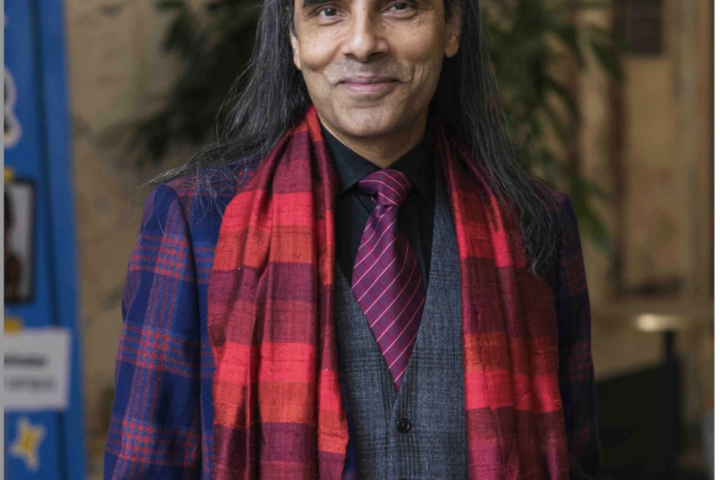
Getting to know DEN’s founder, Professor Farhang, and some of its enthusiastic members reassured me that I had joined a community that not only welcomed me warmly, but also provided a nest for my ideas, allowing me to explore them, challenge them, receive feedback on them, and let them grow. When seeds are planted in fertile soil, and ideas are shared within an open-minded community, the conditions are created for the best possible outcomes. The thought that what we do today could benefit generations to come can be quite awe-inspiring.
DEN gave me a place where I felt that I belonged.
The presentation that surprised me
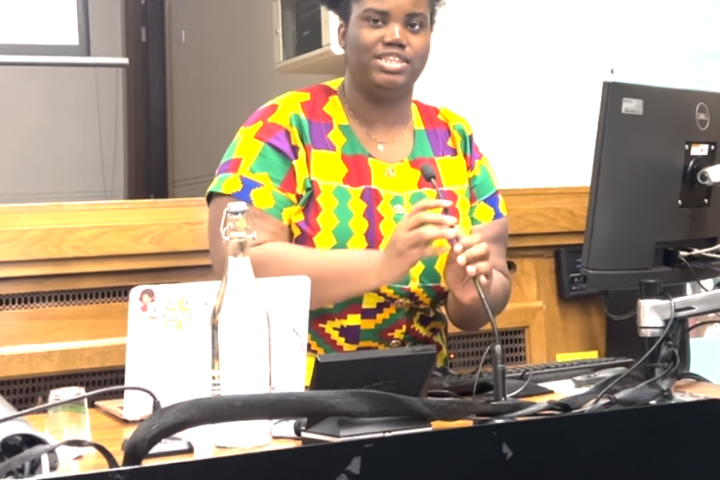
My first real encounter with the DEN community was through the conference. I delivered an interactive presentation on my “From I to Us” 5E Model, wrote a blog post, and contributed to conversations about DEN and its role in education and community.
Because the summer break immediately followed the conference, my opportunity for in-person interaction with the community was relatively limited. However, through the WhatsApp group and the conversations that continued afterwards, I stayed connected. That connection is also one of the reasons I am writing these words now, and I am very much looking forward to contributing more.
One particular moment from my interaction with DEN has stayed with me. During my presentation, I used a simple and playful interaction to surprise the audience and encourage participation. The positivity and the change in energy were immediate. I had hoped people would engage, but I did not expect such a vibrant response. Seeing that my idea, and my style of presenting it, were welcomed so openly and so genuinely, filled my soul with happiness.
Belonging, as a mature student
That may sound like a small thing, but for me it represented something much bigger. I am a mature student, and fitting into a university environment can carry a different significance when you enter it later in life. Generational differences are real, and sometimes a mature student wonders whether age will become a barrier. Younger people naturally have many doors open ahead of them, and their notion of time to do things differs simply because of the stage of life they are in.
What I experienced that day was different. It was not the body’s age that mattered, but the freshness of the spirit, the willingness to participate, and the ideas that were prepared to share. For a few minutes, something very simple transformed an audience into an engaged community.
That experience connects directly with what has been the strongest impact of becoming a DEN member for me: the sense of belonging. DEN creates a space where differences in background or status seem less important than curiosity, ideas and the willingness to contribute. It made me feel that my voice had an echo in the right place.
It is not that I lacked confidence in my own ideas, but I am stepping into the world of academic education, and looking to explore it for many years to come. Receiving feedback from the students I hope to serve as an educator in the future remains incredibly valuable. Coming from an entrepreneurial background, I sometimes think of feedback as reviews of a service I have created and delivered. When I receive a five-star review, I am happy, but I do not see it as proof that my delivery was perfect, far from it. For me, it is a recognition that what I did mattered, that it made someone happy, and that my genuine willingness to serve was noticed. That has always encouraged me to continue, to improve myself, and to deliver something even better.

The 5E Model, the SDGs, and what I brought
DEN and Professor Farhang’s mentorship have given me opportunities to develop my presentation skills further, refine my communication and networking skills, and explore ideas that connect my neuroscience studies with education, community, and science communication.
I have gained and nurtured many of these skills over the years through entrepreneurship, teaching and other professional activities. However, when it comes to academic education, I consider myself a novice, though I can bring transferable skills from other areas of life, and use them to add value.
Presenting my 5E Model to an international audience was particularly valuable professionally. As an entrepreneur and educator, I have always been interested in creating systems that are easy for people to understand and use: frameworks that can provide inspiration, or help someone improve an outcome they are struggling with.
That is also connected with my interest in the United Nations Sustainable Development Goals. I aim to bring some of these goals closer to everyday practice, and to create clearer, easier-to-follow ways to show how they can be applied in education. For me, education sits at the foundation of so much of what humanity is about. It shapes how we understand information, how we relate to one another, and ultimately what we choose to do with what we know.
That is why I particularly value the fact that, within DEN, I can be both a beneficiary and a contributor. DEN does not treat students simply as people who receive education. It gives them space to question, to create, to share ideas, and to participate in shaping conversations about education itself.
A sharpener of emotional intelligence
If I had to describe DEN, I would call it an international community that brings the human side of education to life. It connects students, academics and professionals through conversation, creativity and shared purpose, while giving students genuine space to participate and contribute.
We all possess emotional intelligence, but as we move through life, its edge can sometimes become blunt. We may find it harder to listen, to understand different perspectives, or to genuinely connect with others. DEN provides an environment that helps keep that capacity sharp, by continuously exposing us to different people, perspectives, ideas and conversations.
Of course, the community will mean something different to everyone, because we all arrive from different backgrounds and different disciplines. Many DEN members come from areas such as social sciences, education or politics. I come from a field that sits somewhere on the border between the social and the life sciences: neuroscience. The difference is precisely what adds value. Within a diverse community, we receive input from open-minded people who see the world from different perspectives. Each person brings their own strengths and their own limitations, but all can be united by a commitment to contribute positively, and by a win-win spirit. No matter what our individual disciplines are, education connects all of us in one way or another.
Dare to imagine: advice to new members
For anyone considering joining DEN, my advice is simple: join with curiosity rather than worrying about whether you have enough experience. Participate. Ask questions. Speak to people. Share your ideas. Dare to imagine.
There is an idea often associated with Einstein: that if an idea does not sound absurd at first, it may not be ambitious enough. I like that spirit. I would encourage everyone to dare to imagine, and then start thinking about how to make that idea work in reality.
DEN becomes most valuable when you allow yourself to become part of the community, rather than simply observing it.
What could DEN do next?
That is a difficult question, because DEN already does so much. It allows students to meet regularly in person and online, to share ideas, collaborate, receive feedback, and create written, audio and video content. Students are always encouraged and supported to write blogs and articles, to submit research projects for publication in DEN’s annual book, to participate in conferences, and to engage in international experiences, podcast creation, and video creation. DEN’s social media and website are updated regularly, and students can get hands-on in every aspect, have their say, or learn from others.
Perhaps those who need to do more are we, its members. We are the people who can add the greatest additional value. Every person who comes with an idea, contributes to a conversation, or offers feedback, adds another piece to the community.
I would love to see those connections become even stronger, and remain active beyond graduation. Not simply as a sweet memory of our student years, but as a living network of engagement and support. Once people graduate, there can sometimes be an assumption that they are fine, and no longer need that community. That may be when they need it most.
I would therefore love to see even more natural connectivity and support among current students, alumni, and DEN’s international community throughout the year, creating opportunities for ideas, mentoring, conversations, and collaborations to continue well beyond individual conferences. An already valuable network can become powerful only when its members continue building it together.
Closing
Ultimately, DEN has reminded me that education is about much more than the transfer of knowledge. At its best, education creates connection, participation, belonging, and the confidence to contribute.
* * *
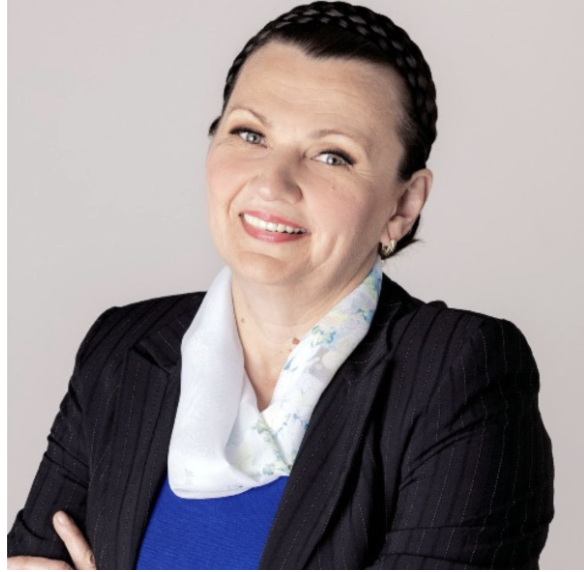
Ribana Cristescu is a mature Cognitive and Clinical Neuroscience student at the University of Westminster, and an entrepreneur working toward a career in science communication. She presented her “From I to Us” 5E Model at the DEN International Conference in May 2026.