
By Najia Benhamza
During the 2024 Olympic opening ceremony, the Algerian national team were seen throwing roses into the River Seine. And every year, around 17 October, roses are thrown into the Seine once again. Both gestures are acts of remembrance for the 1961 massacre of Algerians in France, many of whom were murdered and thrown into the river.
In 1830, France colonised Algeria, and throughout the 132 years of colonisation that followed, Algerians endured unimaginable violence, suffering and pain, from which the nation is still recovering more than 60 years after gaining its independence (Mfa.gov.dz, 2014).
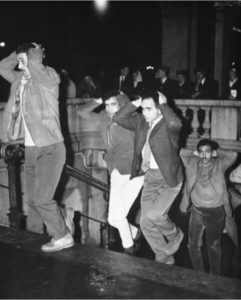
During the Algerian war for independence, on 17 October 1961, over 30,000 Muslims marched peacefully through the streets of Paris. Protesters were deliberately told to carry nothing on their persons, so that nothing could be mistaken for a weapon (House and MacMaster, 2006). This peaceful protest was met with beatings, with weapons fired into the crowds, and with demonstrators shot, tied up and thrown into the River Seine. Between 100 and 300 people were killed.
In the weeks that followed, French media censored and destroyed much of the archive of the event. French and European outlets reported that the military and police had defused a violent protest in which there were only several casualties, and police records were sealed for the next 50 years (Brozgal, 2020). These lies caused deep anger within the Muslim and Algerian community, as hundreds had been murdered. An estimated 14,000 people were arrested, and many more were recorded as “missing.”
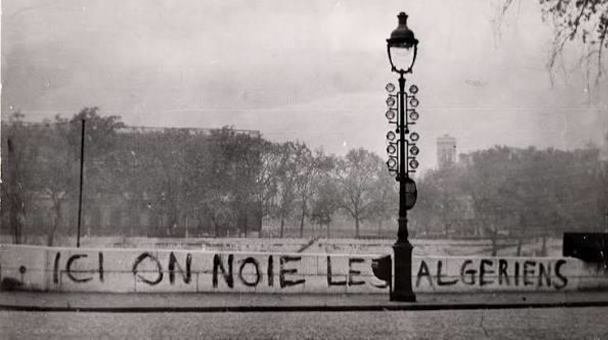
In the days after the slaughter, graffiti began to appear across Paris, all of it tied to the massacre and to the cause of Algerian independence, the same words painted over and over again: “Ici on noie les Algériens” — “Here we drown Algerians.” Yet less than twenty-four hours after each piece appeared, it was gone, the events, the history and the people censored once more.
On the 60th anniversary of the massacre, in 2021, President Macron acknowledged and condemned it, calling the crimes “inexcusable,” but he stopped short of a formal state apology. Sixty-five years on, France has still not taken full responsibility, nor paid any reparations, for the pain, suffering and generational trauma it caused millions of Algerians.
So my question is this. After 132 years of colonisation, and with an estimated one and a half million Algerians martyred through endless massacres and torture over that period — according to Algerian state figures — where are the reparations? Where is the apology? Where is the accountability?
References
Brozgal, L.N. (2020) Absent the Archive: Cultural Traces of a Massacre in Paris, 17 October 1961. Oxford: Oxford University Press.
House, J. and MacMaster, N. (2006) Paris 1961: Algerians, State Terror, and Memory. Oxford: Oxford University Press.
Ministry of Foreign Affairs, Algeria (2014) History of Algeria. Available at: https://www.mfa.gov.dz/discover-algeria/history-of-algeria (Accessed 14 October 2026).




The 1961 tragedy affects many different countries. A specific legal hurdle complicates how these honors are given.