

A WIUT programmes coordinator on leading student delegations to London, editing the DEN book from Central Asia, and what he saw when the community celebrated Farhang
Meyirbek Abdikadirov, Office and Programmes Coordinator, UNESCO Chair in Knowledge Economy, Westminster International University in Tashkent (WIUT), Uzbekistan
Part of the Inside Westminster anniversary series marking ten years of the Democratic Education Network.
* * *
How did you first come into contact with DEN?
I first encountered DEN in 2022, through a joint initiative between Westminster International University in Tashkent and the University of Westminster in London. The programme began with a summer school in Tashkent, where students from London and Tashkent met, exchanged ideas, and worked together in a sustainability-focused hackathon.
We later travelled to London for the DEN conference. I attended as part of a university delegation, together with several students and members of staff. Our cross-border university project was presented within the programme, and the experience introduced me more seriously to the Sustainable Development Goals, and to the idea of developing practical solutions through student collaboration.
What brought me into DEN was the combination of ideas and people. It was not simply a conference where participants listened and left. Students were expected to discuss, question, create and present. Meeting people with similar interests from different countries showed me that sustainability could be approached as a shared intellectual and practical responsibility.
Which DEN activities have you taken part in?
My involvement with DEN has developed in three main directions. First, I have participated in the annual DEN conference several times. I initially joined as a student participant and, over the past two years, have returned with student delegations from Tashkent. I support the students before the conference, help them prepare their projects and presentations, and accompany them during their visit to London. I hope to bring another delegation this year.


Second, I serve as an editor for DEN’s annual student book series. I help collect submissions from across Central Asia, review the works, and provide editorial feedback. This role has allowed me to engage with a wide range of student perspectives and research interests from the region.
Third, I mentor students representing our university at DEN. I work with them on the structure of their ideas, the clarity of their arguments, and the delivery of their presentations. In this sense, my role has gradually shifted from participating in DEN activities to helping other students make the most of the same opportunities.
Was there a moment at DEN that has stayed with you?
From my first experience with DEN, I was struck by how openly students expressed their thoughts and feelings. They spoke confidently about personal and social issues that are not always discussed openly in every society. Their honesty, and the confidence with which they presented their views, stayed with me.
One particular moment stands out. At the most recent DEN conference I attended, the community came together to recognise Farhang’s long-standing dedication to DEN. Students and colleagues spoke about what his support had meant to them. They celebrated his achievements, thanked him, and shared their appreciation very openly. Farhang was moved to tears, and so were many people in the room.
For me, it was an inspiring moment. It showed what an educator can mean in students’ lives, not only as a teacher, but as someone who creates opportunities, builds confidence, and brings people together. That moment has stayed with me as an example of the kind of impact an educator can have.

What aspects of DEN have had the biggest impact on you?
The strongest aspect of DEN, for me, is its community. It is close-knit, supportive, and unusually sincere. Each time I attend, I see how much the participants value the people around them, and how grateful they are for the opportunities and encouragement they have received.
Farhang’s leadership is central to this. He does not simply organise activities. He supports people, believes in their potential, and gives them space to develop. The appreciation that students and alumni show towards him says a great deal about the kind of community he has built.
Seeing this has influenced the way I think about my own work with students. It motivates me to do more and, in time, to have a similarly positive effect on the lives of the young people I work with. DEN has shown me that meaningful educational work is measured not only by the events organised or the outputs produced, but also by the people who become more confident because someone believed in them.
How has DEN helped you develop personally?
DEN has helped me become more open to different people, experiences, and ways of thinking. Its community includes individuals from different countries, disciplines, backgrounds, and stages of life. They may be very different from one another, yet they are united by shared values and a desire to contribute.
Being part of conversations within such a diverse group has strengthened my ability to listen, and to understand perspectives that may differ from my own. It has also developed my communication and my social skills. When people speak openly about their experiences, ambitions, and concerns, you learn not only about them but also about the limits of your own assumptions.
Most importantly, DEN has reminded me that people do not need to be similar to work meaningfully together. Diversity does not weaken a community when there is a common purpose. It can become its greatest strength.

Has DEN helped you with employability or professional development?
My engagement with DEN has mainly taken place through its annual conferences rather than through continuous year-round participation, so I would not claim that it directly determined my career path. Its professional influence has been more indirect, but still valuable.
As I also work on sustainability and student engagement at Westminster International University in Tashkent, DEN has given me practical ideas for developing initiatives within my own institution. I have observed how Farhang creates opportunities for students, maintains a strong network, and builds a community around shared interests. There is a great deal to learn from his approach. Some of these lessons have shaped the way I think about programme coordination, mentoring, and student development in my own work. DEN has therefore contributed to my professional development by providing a living example of how educational initiatives can grow beyond individual events into lasting communities.
What is one thing DEN has given you that you would have struggled to find elsewhere?
DEN has given me the experience of a genuinely strong community. I have attended its conferences over several years, and each time I am surprised by how closely connected its members are. People from different subjects, countries, and stages of their careers come together and form relationships that feel more like family than a conventional academic network.
There is warmth in the way they interact, as well as generosity. People share their knowledge, their experiences, their time, and even their uncertainties. They listen to one another. They celebrate each other’s progress. They remain connected beyond a single event.
That kind of bond is not easy to create, particularly in a world where people are often encouraged to focus mainly on their own advancement. DEN offers something different. It creates a space in which individual growth and collective support are not in competition with each other. That sense of belonging is what I would have struggled to find elsewhere.
What advice would you give to students thinking of joining?
I would simply say: go for it. Of course, the experience will be most valuable if you are genuinely interested, and willing to contribute. DEN is not only a growing community. It is also a community where people can grow. It offers a supportive environment in which students can share their ideas, be listened to, and create something together. Such spaces are increasingly difficult to find.
DEN is also enjoyable. Its members spend time together, form close relationships, and support one another beyond formal academic activities. For students looking for both purpose and belonging, it can offer a great deal. Join with some time, some curiosity, and some commitment. Change often begins with the individual, but it becomes more meaningful when it is shared with others. DEN gives students a place to begin that process.
What would you say to a colleague at another university?
I would encourage them to attend a DEN conference and experience the community directly. It is difficult to understand DEN fully from a description alone. You need to observe the interaction among students, academics, and alumni, listen to the discussions, and see how openly people exchange ideas.
I would also suggest exploring how their own students or institution could become involved. DEN offers more than a conference. It provides opportunities for collaboration, student publishing, international exchange, and community building. A colleague attending for the first time would probably leave with both new contacts and several ideas to take back to their own university.
Should DEN do anything differently in the next decade?
DEN has built an impressive community and has created valuable opportunities for students to present their ideas. One area that could be strengthened in the next decade is the quality and delivery of conference presentations. Students often have meaningful projects and important experiences to share, but the strength of an idea can be lost when a presentation relies heavily on reading from slides, or fails to involve the audience. At a long conference, this makes it difficult for participants to remain attentive. People may begin moving around the room or speaking among themselves, not because the topic lacks value, but because its value has not been communicated effectively.
DEN could introduce public-speaking workshops before each conference. These could cover storytelling, slide design, audience engagement, timing, and confident delivery. Presenters could also receive peer feedback, or take part in brief rehearsals beforehand. The aim would not be to turn students into professional speakers. It would be to help them present their work with the clarity and the energy it deserves. This small investment could make the conferences more engaging, and ensure that good ideas are not only presented, but also remembered.
Anything else you would like us to know?
Thank you for giving me the opportunity to reflect on my experience. My message to DEN is simple: keep going. DEN is a needed space. It gives people the confidence to speak, the opportunity to contribute, and the sense that they belong to something meaningful. I hope it continues to grow.
* * *
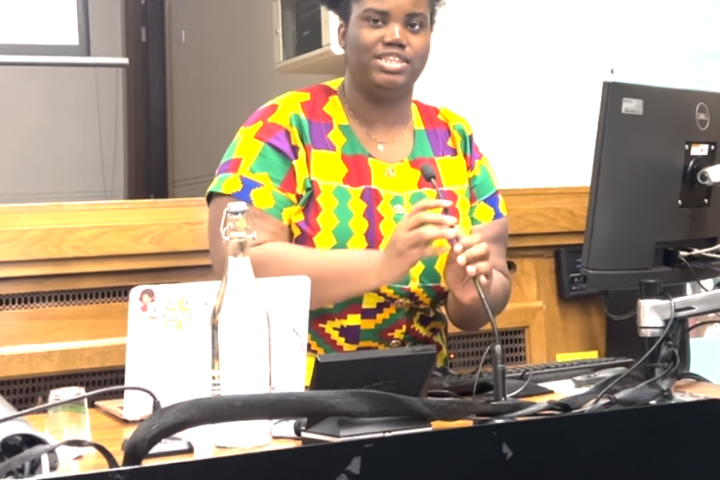
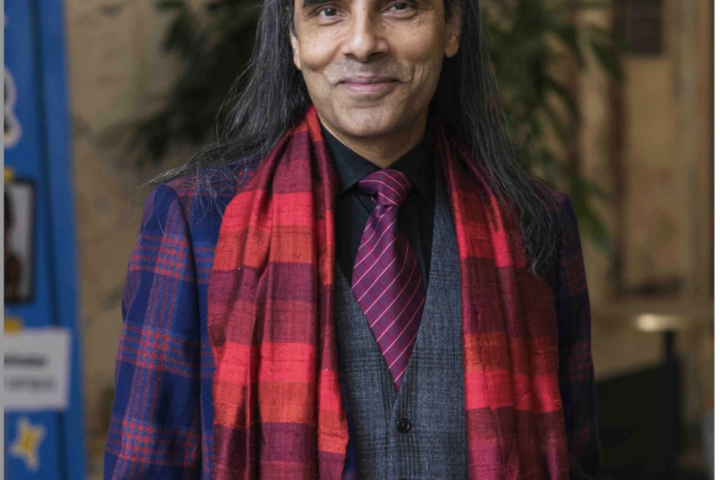
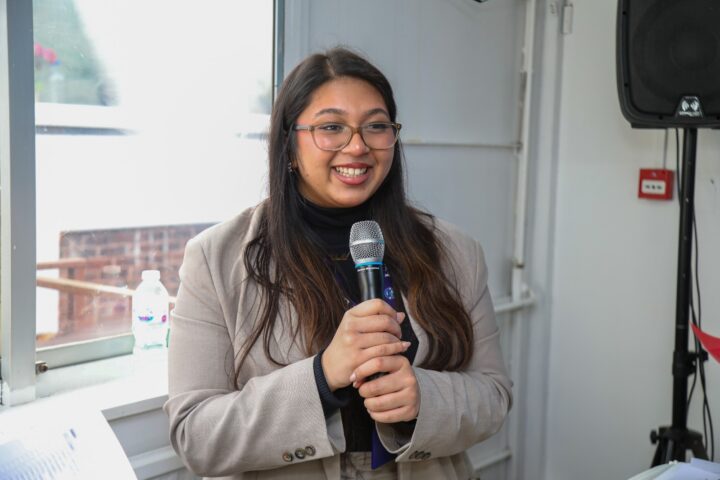
Photo caption: “Behind every meaningful change is a community that gives people the confidence to begin.”

Слоты — это одни из самых известные развлечения в гемблинг-индустрии.
https://craft.worldsfashion.ru/mbyrs6TFkNTl/
На этой платформе представлена ценная информация.
https://forum.abantecart.com/index.php?action=profile;area=summary;u=211552