The Deputy Vice-Chancellor on being in the room when DEN was named, the difference between inviting students into a conversation and letting them set its terms, and the three structural conditions that made ten years possible
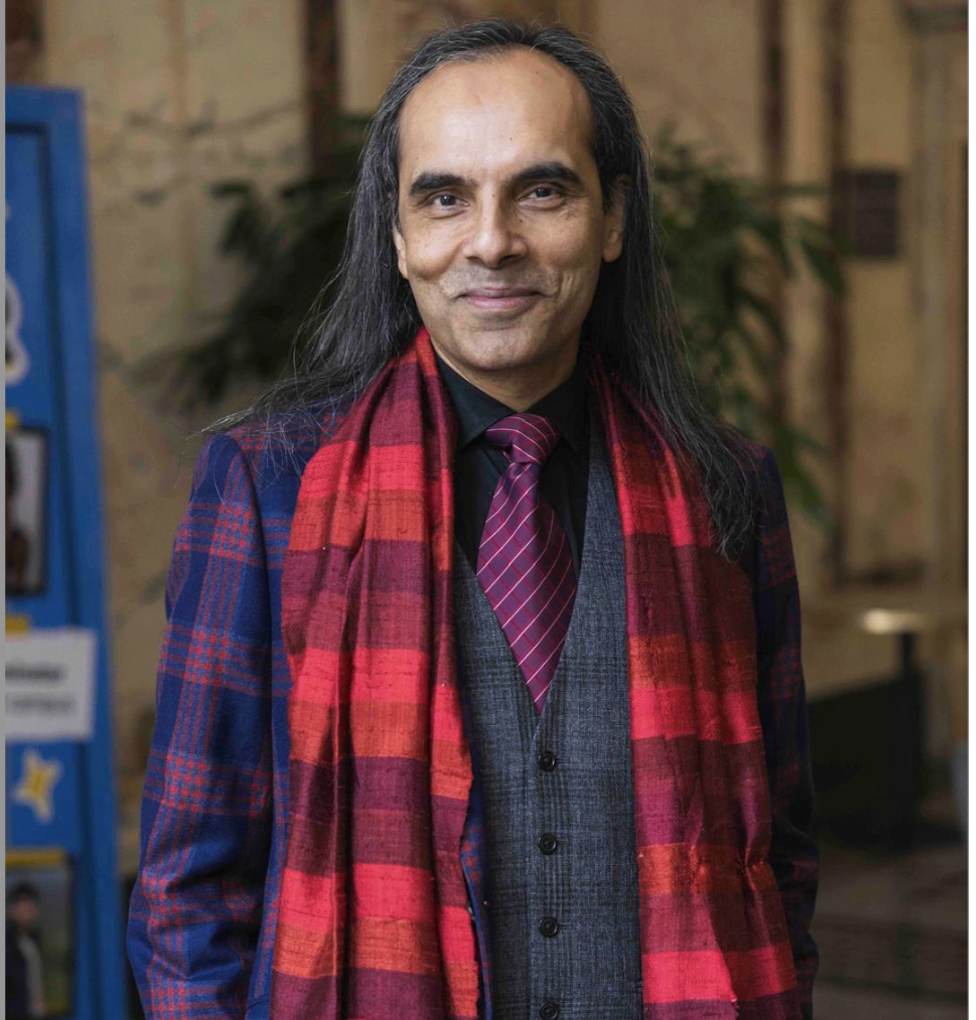
Professor Dibyesh Anand, Deputy Vice-Chancellor (Global Engagement and Employability); Professor of International Relations, University of Westminster, United Kingdom
Part of the Inside Westminster anniversary series marking ten years of the Democratic Education Network.
* * *
How did you first come into contact with DEN, and what have you taken part in?
In December 2016, I was in the room with Dr Farhang Morady and our colleague Dr Ricardo Blaug for a long discussion out of which DEN was formed. In fact, if I recall correctly, the name itself may have been my suggestion. The reality, though, is that DEN did not come out of nowhere. Farhang had already been running a proto-DEN in the form of the International Community Project, and DEN was its new avatar.
Between 2016 and 2023, I was Head of the Department of Politics and International Relations, and then Head of the School of Social Sciences, so DEN grew up inside my Department and School. My involvement, helping to secure funding, field trips and conferences, was about supporting Farhang in whatever he needed. I was a facilitator rather than a leader or manager. My contribution was not intellectual but custodial.
Since 2023, when I became Deputy Vice-Chancellor for Global Engagement and Employability, I have encouraged DEN to work closely with the University-level Westminster Programme for Enhancing Inclusion, Belonging and Sustainable Development. That cooperation now supports DEN’s International Summer School in London, as well as its annual International Student Conference each May.
Was there a moment at DEN that has stayed with you, and what has had the biggest impact on you?
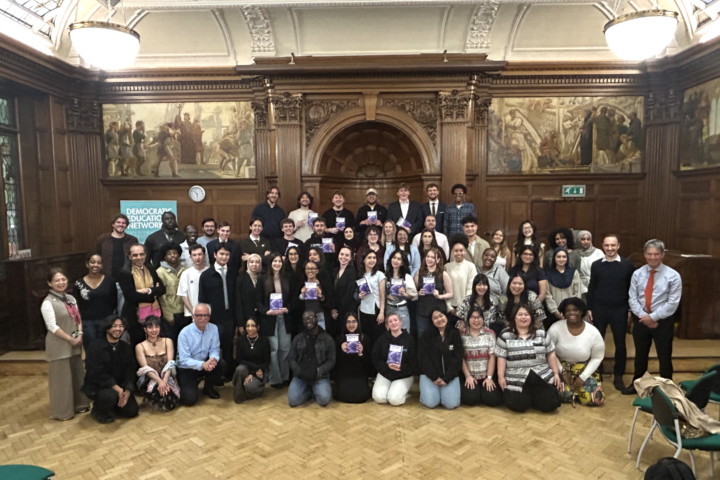
There are many moments that stay with me, but they tend to blur into one another. So rather than recall a single moment, let me describe the feelings that stay: the amazement and pride I experience at every International Student Conference in May, listening to our students present so professionally, and, just as importantly, listening to one another.
What makes these conferences memorable is the mix of collegiality, excellence, confidence and care, extended just as readily to student presenters who have travelled from other countries. The students choose the themes, chair the panels, edit each other’s writing, and later publish the book. What makes me proud is not that we invite students into the conversation. It is that they set their terms.
How has DEN influenced you, and what has it given your own development?
Let me be careful here, because it would be easy to overclaim. DEN did not make my career. My scholarship and my institutional roles did that. What DEN has done is keep me grounded. It never lets me forget that education is not something we do to students. It is something that empowers them.
DEN has also partly shaped how I do the job I now hold. I lead on global engagement and employability, and DEN is one of the most convincing pieces of evidence I have seen at Westminster that these are one and the same, not two. A student who co-organises a conference with peers in four countries is not doing an international activity and separately building employability. They are doing both at once, and doing them better than any workshop on transferable skills could manage. I took that insight from DEN into my portfolio, not the other way round.
What is one thing DEN has given you that you would have struggled to find elsewhere?
Proof.
Every university says it treats students as partners. The sector is saturated with the language. What is scarce is a sustained, decade-long, award-winning and externally scrutinised example you can point to when a sceptical colleague asks whether any of it survives contact with reality. DEN is that example, and it has the books, the conferences and the graduates to show for it.
What advice would you give to students and to colleagues thinking of joining DEN, and what would you say to a colleague at another university?
To students: come before you feel certain. The biggest barrier I have seen is students deciding they will join once they know enough, feel more confident, or have got through a difficult year. Yet DEN is precisely the place where you acquire those things. It is not the place that demands them at the door. You do not need to be an expert. You need to be interested, and to turn up.
To colleagues thinking of getting involved: bring a project, not a plan. DEN works best as a platform. Do not arrive offering to design something for students. They have it covered.
To a colleague at another university: what has made DEN last a decade is not its activities but three structural conditions. It is hosted at the school level rather than inside a single discipline, so its cross-disciplinary character is real. It has had patient, long-term funding rather than annual project bids. And it has had one caring, passionate and committed academic, protected by managers who understood that their job was to remove obstacles, not to take over. Reproduce those three conditions, and the activities will follow. Reproduce the activities alone, and you will have a good year and then a memory.
Should DEN do anything differently in the next decade?
DEN students should redouble their efforts to reach across all disciplines. Why not ask every active member to bring at least one person from outside their discipline to experience DEN firsthand? DEN should also reach out to its alumni and invite them back to share their experiences. After ten years, they are one of its richest and least-tapped resources.
Anything else you would like us to know?
It is easy, at an anniversary, to talk about a network as though it were an institution with a strategy. DEN is not that. It is a culture of taking students seriously, sustained by people who keep doing it without being asked to. Whatever DEN becomes next, that is the thing to protect.
And a word of thanks, which is not merely performative: to Farhang Morady, and to every student who has edited someone else’s writing, chaired a panel they were nervous about, or hosted a delegation from a country they had never visited. A good education is about opening doors, exploring ideas, being bold, challenging the status quo, and giving hope for a more just world. For ten years, DEN has been where that stops being a sentence in a strategy and becomes something students actually do.
* * *
“It is not that we invite students into the conversation. It is that they set its terms.”
* * *
Photo caption: “DEN is where a good education stops being a sentence in a strategy, and becomes something students actually do.”