“Trust the students.”
How DEN reshaped one lecturer’s view of teaching
Linh, Lecturer, International Studies Faculty, Hanoi University, Vietnam
Part of the Inside Westminster anniversary series marking ten years of the Democratic Education Network.
* * *
How did you first come into contact with DEN?
I first came into contact with DEN when a group of University of Westminster students visited Vietnam as part of a field trip. At the time, I was responsible for coordinating and supporting the programme on the Hanoi University side. Through this experience, I had the opportunity to meet DEN colleagues and students, and to learn more about the network’s values and activities.
Which DEN activities have you taken part in?
Beyond organising DEN’s trip to Vietnam, I have participated in the DEN International Conference. One of the highlights was presenting my research on corporate sustainability and greenwashing in Vietnam. Greenwashing was a relatively new topic for many participants, which led to engaging discussions about sustainability, corporate responsibility and the challenges facing developing economies.
Beyond presenting, I also enjoyed taking part in the wider conference discussions and networking activities, which gave me valuable opportunities to exchange ideas with students, academics and professionals from different countries.
Was there a moment at DEN that has stayed with you?
One aspect of DEN that has stayed with me is its trust in students. Throughout the conferences and activities, I was impressed by how much responsibility students were given, not only to participate, but to organise, lead discussions, publish their work and make decisions.
In many educational settings, we are often concerned about what might go wrong if students are given too much freedom. DEN takes a different approach. It empowers students to take ownership, even when outcomes are uncertain. Watching students grow through that process reminded me that education is not about controlling every step, but about creating opportunities for people to learn through experience, responsibility and even mistakes.
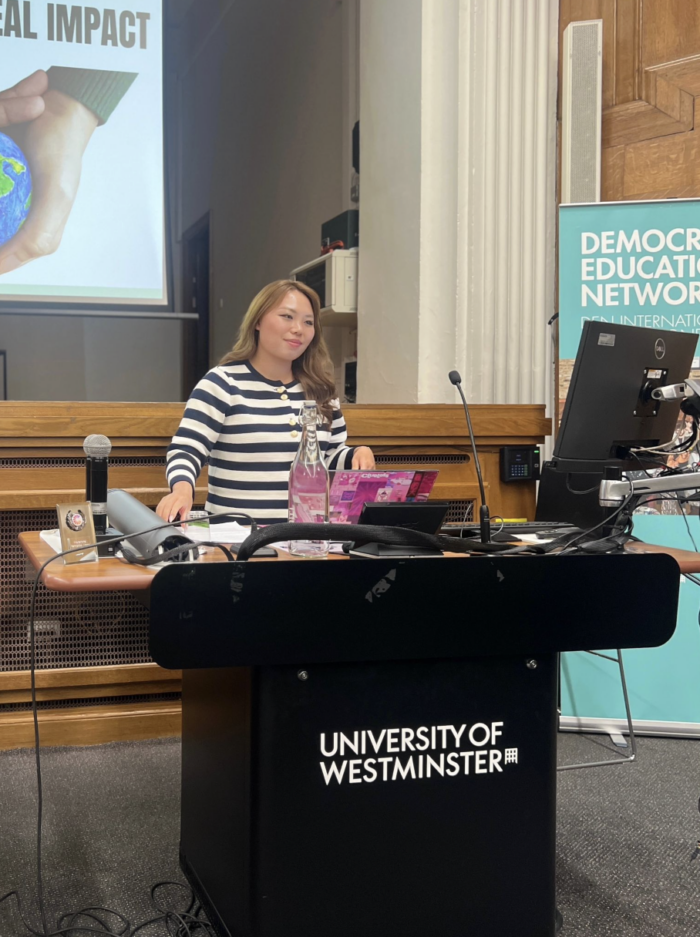
DEN showed me that meaningful education is not about controlling every step, but about trusting people to learn through responsibility, participation and experience
What aspects of DEN have had the biggest impact on you?
What has had the biggest impact on me is the genuinely democratic culture of DEN. Despite bringing together professors, lecturers, students, alumni and professional staff from different countries, there is very little sense of hierarchy. Conversations are open, ideas are valued on their merit rather than on someone’s title, and everyone is encouraged to contribute.
As someone coming from a culture where academic hierarchies can sometimes be quite visible, I found this refreshing. DEN demonstrates that meaningful learning happens when people engage with one another as partners rather than as people separated by status or position.
How has DEN helped you develop personally?
DEN has influenced me both personally and professionally. As a lecturer teaching Intercultural Communication and Community Development, I often encourage students to engage with diversity, listen to different perspectives and recognise the value of participation. Through DEN, I was able to experience these principles in practice rather than simply teach them in theory.
Engaging with students and colleagues from different cultural, social and disciplinary backgrounds strengthened my understanding of intercultural dialogue, and reminded me that meaningful communication begins with openness and mutual respect. At the same time, DEN’s emphasis on participation and shared ownership resonated strongly with the values I teach in Community Development: that sustainable change happens when people are empowered to shape their own communities rather than having decisions imposed on them from above. Experiencing these ideas within an international network has made me a more reflective educator, and has influenced how I approach both teaching and collaboration with students.
Has DEN helped you with employability or professional development?
Yes. DEN has contributed significantly to my professional development as a lecturer and researcher. Through the network, I have been able to participate in international conferences, collaborate with colleagues from different countries, and explore new approaches to teaching and research. The experience has also supported the development of partnerships between Hanoi University and the University of Westminster, creating opportunities for future academic exchange and collaboration.
What is one thing DEN has given you that you would have struggled to find elsewhere?
A genuine sense of belonging to an international academic community. Many professional networks focus primarily on research outputs or institutional prestige, but DEN places equal value on dialogue, mutual support and personal growth. Finding a space where students, academics and professionals can learn from one another as equals is something that is quite rare.
What advice would you give to students thinking of joining?
Be curious, and do not be afraid to participate. You do not need to be the most experienced person in the room to contribute something valuable. DEN works best when people share their ideas, ask questions and engage with others openly. The more you invest in the community, the more you will gain from it.
What would you say to a colleague at another university?
I would describe DEN as a unique international network that combines academic discussion with genuine community building. It creates opportunities for students and academics to collaborate across borders, develop critical thinking, and engage with real-world issues. For institutions that value internationalisation, student engagement and democratic approaches to education, DEN offers an inspiring model.
Should DEN do anything differently in the next decade?
As DEN enters its second decade, I would love to see more opportunities for sustained collaboration between members rather than interactions that happen primarily around conferences. One particularly promising area is deeper involvement from universities in the Global South.
One practical approach could be to create regional DEN hubs or ambassador programmes that enable members in different parts of the world to organise local activities while remaining connected to the wider network. This would help DEN become even more accessible and truly global, while maintaining its democratic spirit.
* * *