From the Wells Street basement to EU Funds Expert in Romania
Rareș Hărșan, BA (Hons) Politics and International Relations, University of Westminster, Class of 2020; now EU Funds Expert, European Funds Service (Strategy, International Relations and European Funds Direction), S.N.G.N. ROMGAZ S.A., Romania
Part of the Inside Westminster anniversary series marking ten years of the Democratic Education Network.
* * *
How did you first come into contact with DEN?
I remember first hearing about DEN during my first year of university, at the end of one of Farhang’s Dilemmas of International Development seminars. He did not invite us to DEN itself; instead, he invited us to the International Food Festival, which happened to be organised by DEN. A very clever way to recruit new students, if you ask me. A large part of the people I met at DEN had also ended up there as a result of attending the festival. In true student fashion, they came for the food and stayed for the experience.
It certainly worked on me. I went to the Wells Street building on a Thursday evening out of pure curiosity, both academic and culinary, with one of my colleagues at the time (shout-out to Argjira). I quickly acclimated to DEN, its collaborative atmosphere and its “DEN-izens”. That first day of curiosity marked the start of three years of belonging to something greater, yet still familiar.
Which DEN activities have you taken part in?
I will give you four. First, the Words Heal the World project, which started as a student project and evolved into an NGO, led by Beatriz Buarque (currently a Fellow at LSE specialising in the alt-right politics of truth).
Second, the DEN Conference as a direct contributor in 2021, when I wrote and presented a paper called “COVID-19: fuel for a great reset?”, in which I explored how the pandemic amplified the socio-economic disparities of the neoliberal capitalist system we live under. The paper was also published in the DEN volume The Unprecedented Impacts of Covid-19 and Global Responses.
Third, the DEN Conference as an editor for the Global Crisis, Local Voices book, published in May 2019.
Fourth, Inside Westminster magazine as a direct contributor in 2020, via the article “Romania, Covid-19 and the post-Westminster Good Life”, in which I gave an account of my country’s response to the pandemic and examined my return home through the lens of Aristotle’s concept of eudaimonia.
Was there a moment at DEN that has stayed with you?
I remember Farhang telling everyone at the end of every DEN meeting that his office was always open to us. I can attest to that, because I was one of the students who would pay him a visit from time to time. I remember how quickly he noticed if I was having a bad day. With a reassuring tone and a warm smile, he would say: “Rareș, just show up and see what happens.”
I also remember his persuasiveness. He would not tell someone what to do directly. He would instead ask that person to help him get something done. I have integrated that into my own communication style.
What aspects of DEN have had the biggest impact on you?
The sense of community, I would say. And learning to celebrate other people’s success even when you did not contribute to it.
Being a member of DEN also put me in contact with senior students, PhD candidates, and other professors I would not normally have met through my curriculum, which helped me refine the academic skills I needed at the time to excel in my course. Which I did.
How has DEN helped you develop personally?
DEN offered me a new support system during a time when I needed one. It was a safe space where I was able to come out of my shell and find myself as a person. That is where I developed my communication skills, my confidence, and the ability to coordinate and be part of a team.
In DEN I learned that despite studying abroad, far away from home and family, support was half an hour away by tube, whether that came from Farhang, Frands or Sam.
Has DEN helped you with employability or professional development?
Of course it did. Interacting with DEN is enough to gain skills on its own, given the range of people one can meet there: academics, professors, first years, seniors, graduates.
DEN is where I learned to be part of a team, but being a member also helped me observe and learn from natural-born leaders doing what they do best at the helm of their projects. Teamwork involves people, which is why I had to learn critical thinking (processing the ideas of the person you are arguing with and detecting logical inconsistencies), rhetoric (persuasiveness), and detachment (the realisation that arguments within a team happen because people care about the result, not because of suppressed resentment).
What is one thing DEN has given you that you would have struggled to find elsewhere?
I would not have been able to forge the relationships I did at university if I had only turned up for lectures and seminars. That much I am sure of.
What advice would you give to students thinking of joining?
Definitely turn up for the International Food Festivals. They are the gateway to a new dimension of opportunities. That is how I joined.
Inquire about DEN’s ongoing projects and ask how you could contribute, if you are interested. Even if you are sceptical at first, do not rush. It might grow on you. It did with me.
If you are feeling lost, talk to someone (Farhang, for example). If you are able, take part in the international student trips. I was not able to, but I always heard good things about them. And bring your friends. That is something Farhang would say too.
What would you say to a colleague at another university?
DEN is a living, breathing organism animated by its students and supporting professors. You might find yourself enjoying Lebanese cuisine in the basement of the Wells Street building one day, a chill pint of cider with your favourite DEN people the next day, an eye-opening lecture in a country you never thought you would visit the day after, only to finally prepare a conference about the latest geopolitical trends by the following week. You never know what might happen.
Should DEN do anything differently in the next decade?
I cannot speak to many things, but I personally would not mind seeing more DEN alumni and DEN collaboration opportunities. For example: inviting alumni back to the University as speakers about their DEN experience. Basically, this article idea, but as a panel. I was very happy to have been contacted by Farhang after all these years, and I wrote this whole piece with a smile on my face.
* * *
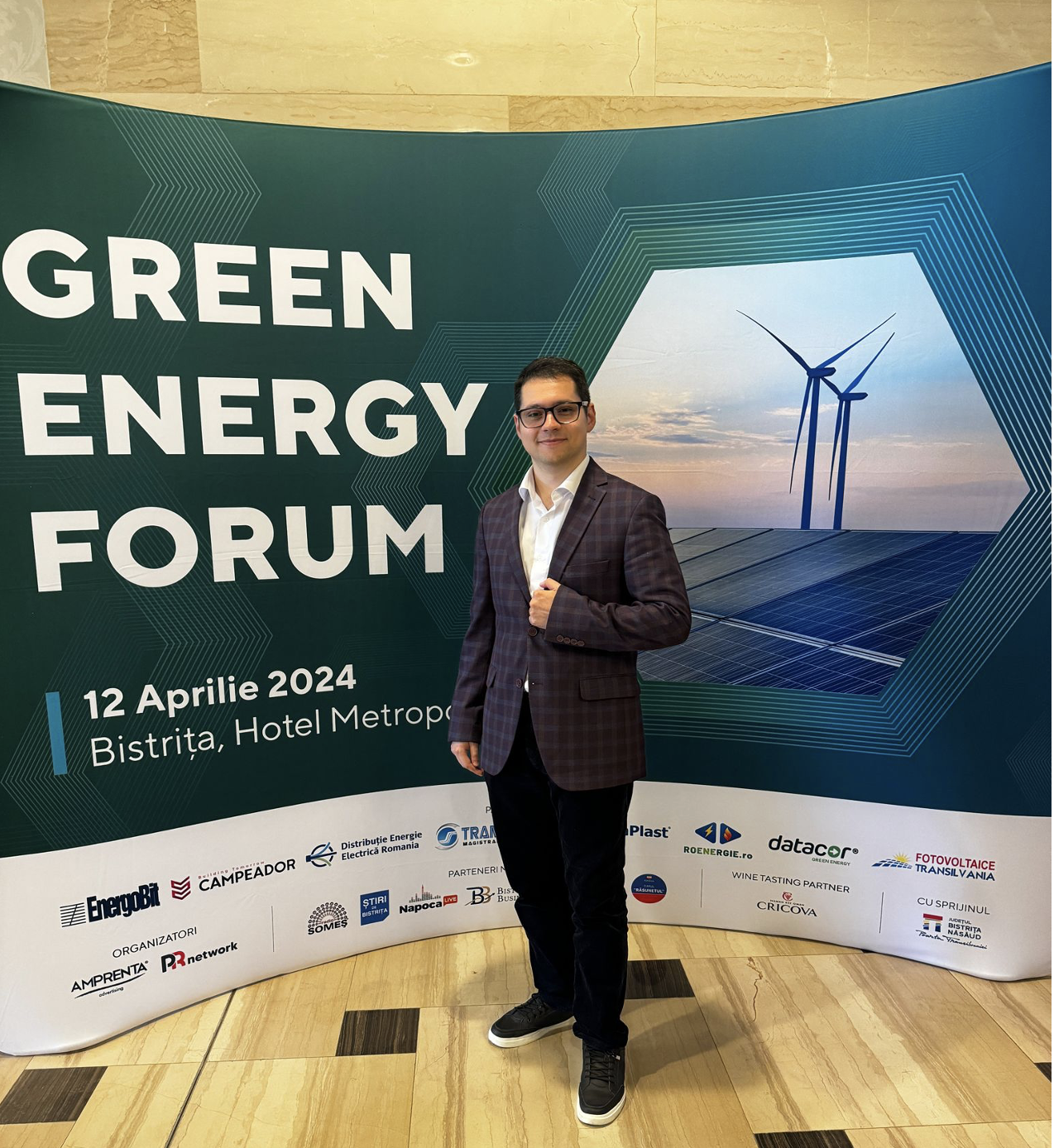
Photo caption: From the Wells Street basement to EU Funds Expert at ROMGAZ. Came for the food. Stayed for the experience.