A Peruvian legal scholar on witnessing DEN’s beginnings in 2015, and the case for Latin America in the next decade
Professor Dr Horacio G. Priale, Doctor in Law, Lecturer in the Law Department, Pontificia Universidad Católica del Perú, Lima, Peru
Part of the Inside Westminster anniversary series marking ten years of the Democratic Education Network.
* * *
How did you first come into contact with DEN?
I witnessed the true beginnings of DEN back in 2015, when Professor Farhang Morady invited me to spend a visiting research fellowship at the University of Westminster. I was there to document what would become my future book on human flourishing and the need to rethink property, taking into account the property and settlement challenges of Peru.
I saw the dynamism, the magnetism, and the industrious work of a group of students led by Professor Morady, in full swing. Soon after, DEN was born.
Which DEN activities have you taken part in?
I was a visiting researcher during the formative period of DEN. Earlier, I had also given lectures to students and professors at the University of Westminster on the challenges of building institutions in Latin American countries with fragile political systems.
Was there a moment at DEN that has stayed with you?
In general, the relaxed conversations in informal settings, without a set schedule. And especially the University of Westminster’s emphasis on incorporating the social community into research activities for development.
What aspects of DEN have had the biggest impact on you?
Thanks to those fascinating conversations with professors and students, who soon formed DEN, I was able to greatly enrich my research and to discover the specific circumstances surrounding development and democracy in various countries. I deeply appreciate DEN as a microcosm for discussing democratic questions in developing countries.
How has DEN influenced your teaching, your research, or the way you think about working with students?
A great deal. The group dynamics, the ability of students to plan, write and present their own topics, and the quality of the research that emerged from these young people from various countries have all been very useful to me as I try to implement similar approaches in my teaching work in Peru.
Has DEN supported your academic career or professional development?
Yes. Professor Morady invited me to ICOPEC years ago in Kocaeli, Türkiye, where I had the opportunity to speak about the challenges of urban renewal in several Peruvian informal settlements. As a result of that collaboration, I wrote a chapter that was included in a book published by IJOPEC in 2013.
Later, in 2015, thanks to Professor Morady, I was able to access the University of Westminster’s resources and to dedicate myself to researching property ownership models in developing countries. That research led to the publication of my book, Rethinking Property (Lancom Ed, Lima), in 2020.
What is one thing DEN has given you that you would have struggled to find elsewhere?
The vibrant atmosphere of conversations and exchanges of experience, without schedules, locations, or protocols.
What advice would you give to students and colleagues thinking of joining?
Do not hesitate to contact DEN to propose discussions, debates, and academic developments related to the future of democracy in emerging countries.
What would you say to a colleague at another university?
London’s intellectual and academic atmosphere is among the best in the world, and DEN’s central London location is unbeatable. The University of Westminster’s educational model is, in my view, the most inclusive I have ever seen.
Should DEN do anything differently in the next decade?
Think much more about the problems of democracy in Latin America, and organise joint activities with leading universities and research centres in Peru, Brazil, Chile and Colombia.
Anything else you would like us to know?
I really want to visit you again, to resume old conversations, to update them, and to propose new topics.
* * *
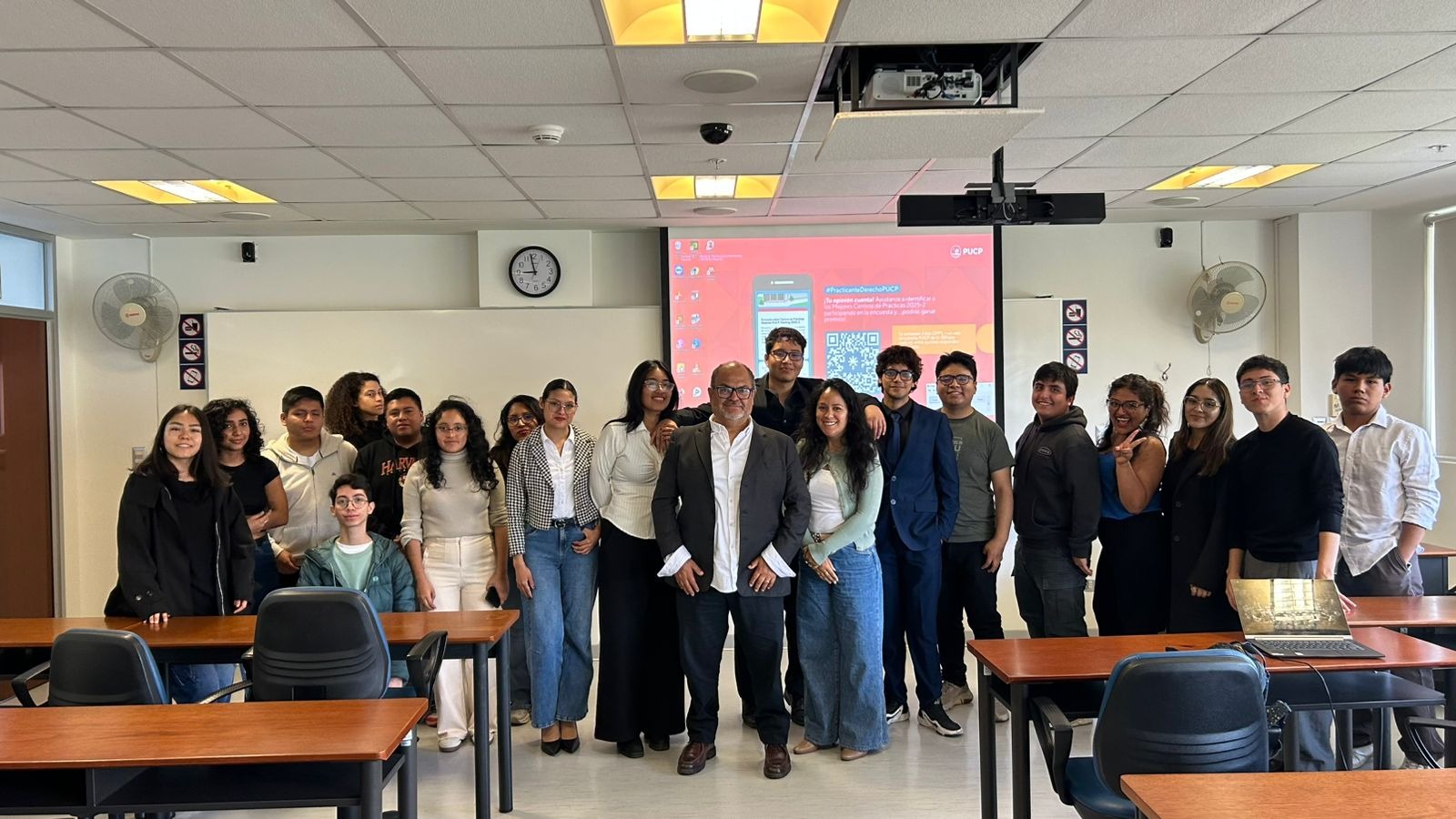
Photo caption: Professor Dr Horacio G. Priale, Lecturer in Law at Pontificia Universidad Católica del Perú, reflects on a 2015 visiting fellowship at Westminster and the case for Latin America in DEN’s next decade.