
A third-year Politics and International Relations student on writing about knife crime and mixed heritage, and on finding a room where her voice belonged
Arika Heaven, third-year BA Politics and International Relations, University of Westminster (Regent Street), London, United Kingdom
Part of the Inside Westminster anniversary series marking ten years of the Democratic Education Network.
* * *
How did you first come into contact with DEN?
I was first introduced to DEN through one of my second-year courses, Democratic Engagement in an International Context, led by Farhang himself. DEN then became a carryover from my lessons into a wider community, which has honestly been really fun, and a great way to connect with people I never thought I would talk to.
Which DEN activities have you taken part in?
I have written many blogs on things I have enjoyed talking about, from knife crime, and the idea of it being a “generational baton,” to the idea of Blackness and mixed heritage being palatable to others. I also had the chance to be involved in the DEN annual book, writing a chapter that started with my knife crime blog, then expanded into coursework for the module, and then into something suitable for publication in the book.
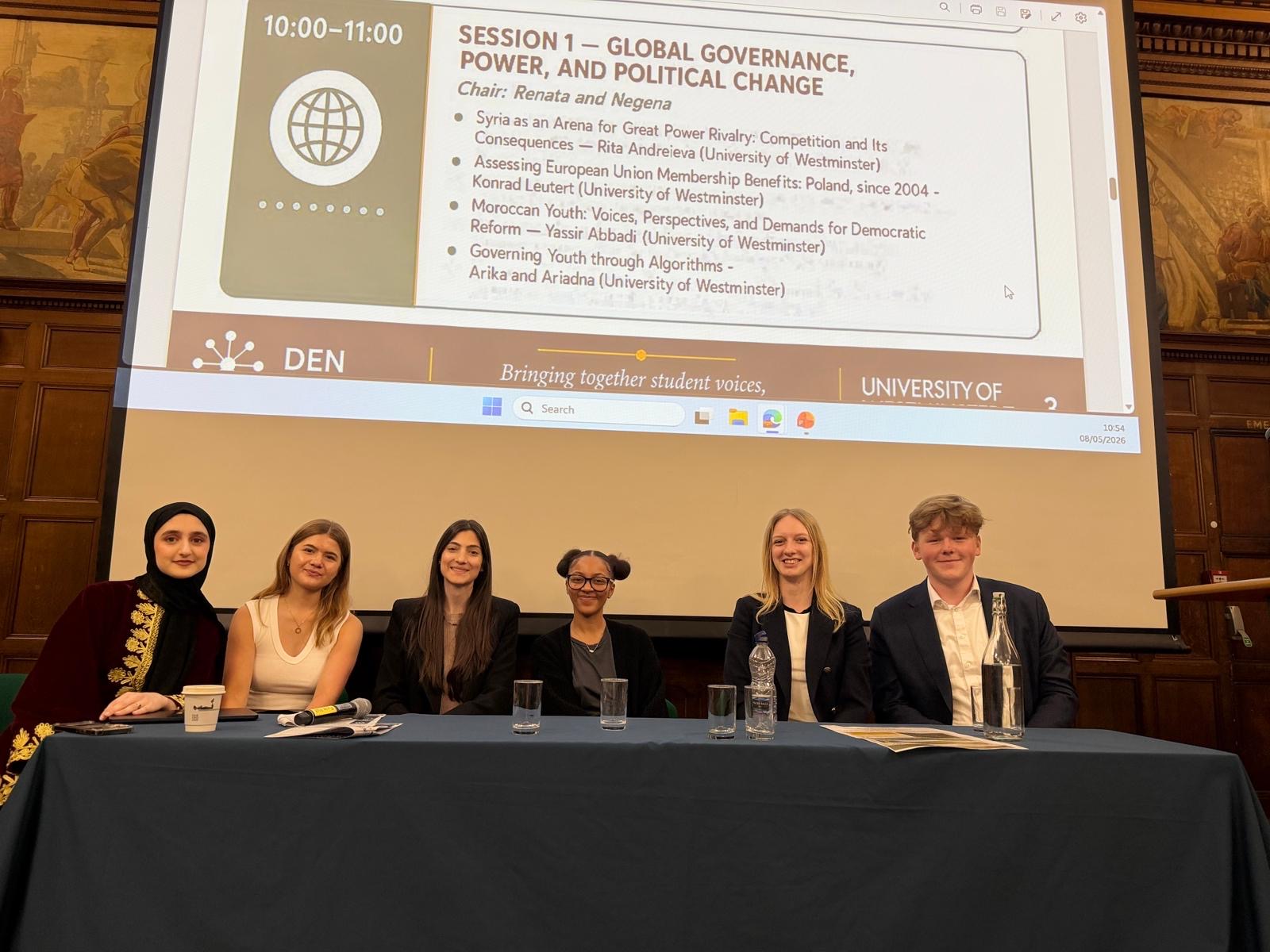
Finally, I was part of the international DEN conference during my internship, thanks to Farhang. I got to chair other people’s amazing ideas, and I also got to speak on another chapter I was writing with a master’s student and an alumnus who is now a research fellow at the London School of Economics (LSE), all of whom are actively involved in DEN.
Was there a moment at DEN that has stayed with you?
One thing I can say about DEN is that it is more than just a community. Its ideas are fuelled into one place, where everyone gets the chance to talk, and to understand others.
When I wrote my knife crime piece, I remember all the amazing feedback I got from the upperclassmen and my own year, the questions I received, and how my imagery stuck with so many people that they wished they could read more. It allowed me to write and share without any fear. To be as gut-punching as needed with the topics I will forever talk about. Even just the title of To pass the knife sticks fully. And my first piece, Half Caste or Fully Bred. The way people spoke about it was about how hauntingly beautiful the first line was. To be branded as cattle but distinguished as human. I love writing pieces that get you thinking, and I hope to continue doing so.
What aspects of DEN have had the biggest impact on you?
I have said it once, and I will reinforce it: it is the community. To have people around you who have a passion, a fear, a dream. Everyone wants to be heard about something, and that is exactly what DEN does. It allows you to have a voice.
How has DEN helped you develop personally?
I have always been outgoing, honestly, but I think DEN has strengthened that further. Branching out to talk to different groups, speaking to others more fluidly. It is a lovely feeling to have.
Has DEN helped you with employability or professional development?
I would say especially with professional development. I had the opportunity to showcase not only my communication skills but also my writing skills. It was an opportunity to write in the DEN book, yes, but also to collaborate with people at different levels of education, and in different job roles, which is an extraordinary opportunity that is not afforded to many people. I would never have thought I would get the opportunity to talk to a fellow from LSE, or to write with a master’s student. Especially given that the collaboration grew out of my work specifically. Something I am so passionate about had the chance to be developed further with two others at different points in their educations and careers. It was an amazing opportunity.
What is one thing DEN has given you that you would have struggled to find elsewhere?
Definitely a chance to showcase my writing. I love writing, always have. I lost my spark for it after A-levels, but DEN pushed me to want to write more, not only my own poetry, which I have been doing on my own, but in a room where people can read my thoughts and talk about them. Writing blogs in a place where I know they will be shared, because we are all given the opportunity to share them.
What advice would you give to students thinking of joining?
Be yourself. Nobody cares for the façade of a person. Be your natural, complete self: raw, unhinged, talented, and fearful. That is the beauty of DEN. No matter how nervous you may be in the first sessions, even if you do not talk at first, your voice will find you. You will want to talk, because you have many amazing ideas too.
What would you say to a colleague at another university?
Again, it is all about community and opportunity. To talk because you want to talk, to listen because you want to listen, and just showing up, hearing and seeing the dynamic that has been built over months. It is enriching to see, and to be a part of.
Should DEN do anything differently in the next decade?
Honestly, I have no idea. I like it how it is. It is not coursework, nor a module. It is people showing up because they want to.
* * *
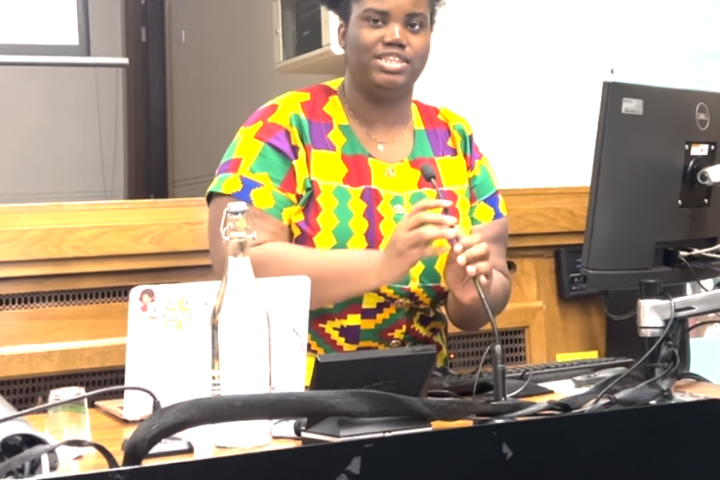
Photo caption: “Be your natural, complete self: raw, unhinged, talented, and fearful.”

My experience with campus politics was quite different. I found that speaking out in formal settings requires a specific kind of preparation.