A reflection on shared challenges, thinking beyond ourselves, and what a Criminology student took home from a summer school in Thailand.
By Bernaflor Canape-Demaluan. Misamis University, Philippines.
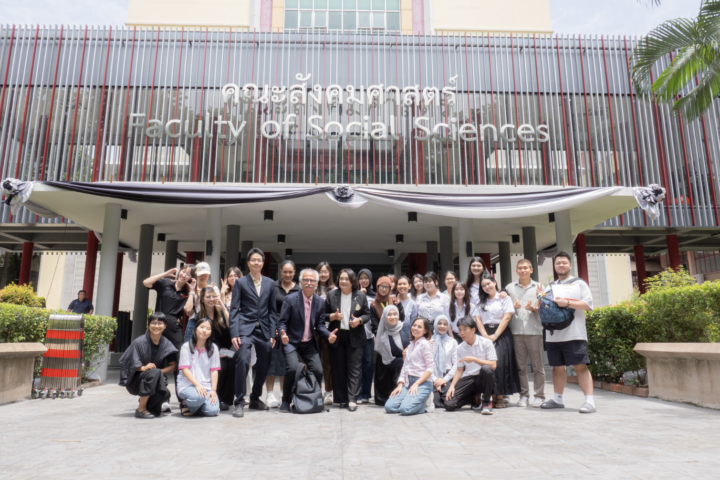
The SOC-ENVI International Summer School 2026 was hosted by the Faculty of Social Sciences at Kasetsart University, Bangkok, in partnership with the Democratic Education Network at the University of Westminster, London. It ran for a fortnight in July 2026 and brought together undergraduate and postgraduate students from the Philippines, Indonesia, Vietnam, Hong Kong, China, and the United Kingdom to work on sustainability, social innovation, and community-based development, both in the classroom and in the field.
One question at the start of the fortnight quietly reordered how I see my place in the world. Two weeks later, I flew home to the Philippines with a habit I did not have before: thinking beyond myself, and remembering that my actions never really end with me.

A question I could not answer
“What did the last 24 hours of your life have to do with someone you have never met on the other side of the world?”
That was one of the first questions asked of us by Dr Farhang during our Summer School in Thailand. I remember how most of us struggled to answer it. We looked at the question from different perspectives, and our answers were very different from one another. But eventually, they all seemed to lead to one idea: we live in a shared world.
Joining the two-week Summer School in Thailand gave me the opportunity not only to learn in a different environment, but also to meet people from different parts of Asia, with different cultures, experiences and perspectives.
Different countries, shared challenges
Throughout the programme, we had lectures, discussions, group activities, presentations, field experiences and conversations about communities, sustainability, and the challenges people face. One of the things that struck me most was how similar many of these challenges were to those we experience in our own communities back home. We may live in different countries, but many of the problems we face are shared.
The programme also helped me understand sustainable development in a more personal way. Before, it was easy to think of sustainability as something connected only to policies, projects or environmental programmes. During the Summer School, I began to see that sustainability is also about the choices we make every day, and how those choices affect other people, our communities, and future generations.
Thinking beyond myself
More than anything, the lesson that stayed with me was very simple: think not only about yourself, but also about others.
It can be seen even in ordinary things. If we use a comfort room with the next person in mind, we will leave it clean. If we think about future generations who also deserve to experience the beauty of nature, we will take better care of our environment. And if we consider the rights of other people, we become more careful not to abuse our own rights at their expense.
What this means for a Criminology student
This realisation also connects strongly with my field of Criminology. Public safety is not simply about enforcing laws or responding to crime. It also requires understanding people, respecting human rights, protecting communities, and recognising how our decisions affect others. Sometimes, preventing harm begins with something as simple as considering another person before we act.
“Sometimes, preventing harm begins with something as basic as learning to consider another person before we act.”
Friendships that share a goal
Another part of the experience that I will always treasure is the friendship I formed with my classmates. We came from different parts of Asia, and although we only spent a short time together, it somehow felt like we had known each other longer. We shared ideas, laughed, learned, explored, and talked about issues that mattered to us. What makes those friendships more meaningful to me is knowing that, despite coming from different countries, we share a similar goal: to become future changemakers in our own communities.
I believe the bond we formed does not end when the Summer School ends. In one way or another, each of us will go home carrying the same concern for our environment, our communities, and the kind of future we want to help create.
The Summer School also allowed me to witness people working seriously for the general welfare of their communities. I saw how people from different backgrounds could come together because of a common purpose, and how nature itself can recover when people choose to protect and help restore it. It made sustainable development feel less like an abstract idea and more like a shared responsibility.

What I carry home
Looking back, those two weeks in Thailand were more than an academic experience. They opened my mind to how interconnected our lives really are. Education not only gives us new information. Sometimes, it changes the way we see our place in the world and the responsibility we have towards others.
What I will carry with me is the habit of thinking beyond myself. In my work, in my community, and even in the smallest decisions I make every day, I want to remember that my actions do not end with me. Somewhere, somehow, they may affect another person, even someone I may never meet.
“My actions do not end with me. Somewhere, somehow, they may affect another person, even someone I may never meet.”
And perhaps that is one of the best lessons I brought home from Thailand: we may come from different places, but we share the same world, and each of us has a role in making it better.

About the author
Bernaflor Canape-Demaluan is a Criminology student from the Philippines. She joined the SOC-ENVI Kasetsart University International Summer School in July 2026 as part of the Philippine cohort.