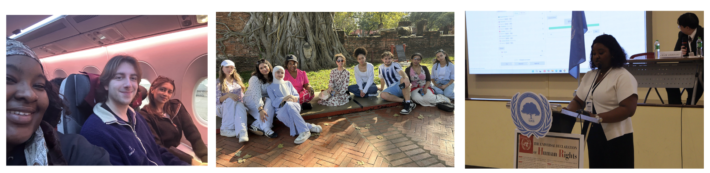
Going to the other side of the globe with people I barely knew from class took an unexpected turn that I never imagined. This trip to Thailand was more than just travel; it was a transformative experience. The journey began at a London airport, where we waited for one another, discovered our seatmates, and slowly transitioned from classmates into companions. This field trip taught me invaluable lessons about rapidly developing cities, cultural diversity, tolerance, respect, and the importance of forming meaningful friendships beyond the classroom.
Being in Bangkok for the second time might appear repetitive, yet it felt entirely new from the very first day. The city’s constant transformation makes it impossible to experience it the same way twice. Bangkok is among the world’s fast-developing cities and attracts approximately 30.3 million international tourists annually (Nation Thailand, 2025). Its rapid urban growth and smart-city initiatives create an environment that is both inclusive and welcoming. From secure streets and efficient transport systems to vibrant shopping centres and night markets, the city manages to modernise while preserving its cultural identity. A clear example of this balance is the introduction of the Thailand Digital Arrival Card (TDAC), which enhances the tourist experience while streamlining migration processes. This initiative reflects a pragmatic approach to development that prioritises efficiency, safety, and long-term sustainability.
The trip also provided an invaluable opportunity to build friendships and network with people from diverse backgrounds. One particularly memorable moment was meeting the dean of Kasetsart University — an experience that many students described as rare and prestigious. This contrasted with our experience at the University of Westminster, where university leaders are more accessible. Such differences encouraged me to reflect on and appreciate the sense of security and openness we often take for granted at home. The lecturers accompanying us also played a key role in enriching the trip. For example, Ajan Bum, a history lecturer known for his distinctive fashion and engaging storytelling, transformed palace and museum visits into immersive learning experiences. Interacting with Thai students further deepened the cultural exchange, from sharing local snacks to receiving everyday recommendations that made us feel integrated into the city.
Another highlight was participating in a Model United Nations conference for the first time. Representing Russia challenged me to research a country I had previously overlooked but which plays a significant role in contemporary global politics. Observing other delegates embody their assigned roles was both educational and inspiring. The conference tested my communication skills, critical thinking, and ability to listen and negotiate effectively — all essential skills for my future academic and professional journey.
Beyond academic engagement, learning about Thai culture was central to the experience. This learning occurred both theoretically through lectures at Kasetsart University and practically through cultural activities such as traditional greetings and cooking Thai cuisine. Thai culture is deeply influenced by historical interactions with other societies through trade, alliances, and conflict, resulting in a rich blend of traditions. This cultural diversity — including Thai Chinese and Thai Indian influences — contributes to Bangkok’s cosmopolitan character and fosters tolerance and peaceful coexistence. Food, clothing, and customs all serve as bridges that allow people from different backgrounds to connect meaningfully.
Lastly, I would like to talk about my classmates who have become like family to me today. Starting from my roommate Laiyba who i always fight with for the room key but still has a special place in my heart, Negena and Hajar who always made thier room available for our late night snacking and dining, Grace who thought us hygiene steps:, Mawera and Ramzi who cracked us up with jokes, Maria P the caring amongst us, Maria T who I worked for as an accountant, Josh who always seemed amazed at the most minor things, Julia and her addiction to 6 7 and Abiya with whom an unexpected friendship blossomed. Without these people, I doubt I would have had this much fun during these 10 days. A special thank you to Farhan for organising this trip with us and to Kyoko, who took good care of us to and from Thailand. She stepped in as the mother of the group and made sure we had no issues. I will be forever grateful for this experience.
Fatimata Mamadu