Ruby Mitchell
Visiting Istanbul let me learn about Turkey in a way I could not have through social media or online reading. One of the most valuable parts of the trip was the seminar at İstanbul Kültür University, where we heard directly from Turkish academics about Turkey’s economy, its relationship with the European Union and the rise of authoritarianism. Hearing these subjects discussed by scholars who live and work in Turkey gave me a different perspective and a deeper understanding of the country’s politics.
The topic that stood out most was Turkey’s increasingly authoritarian character. Political developments can be studied through academic sources, but hearing Turkish lecturers explain the situation gave me a more direct sense of the country’s political environment and of how political change is experienced and discussed by the people living through it.
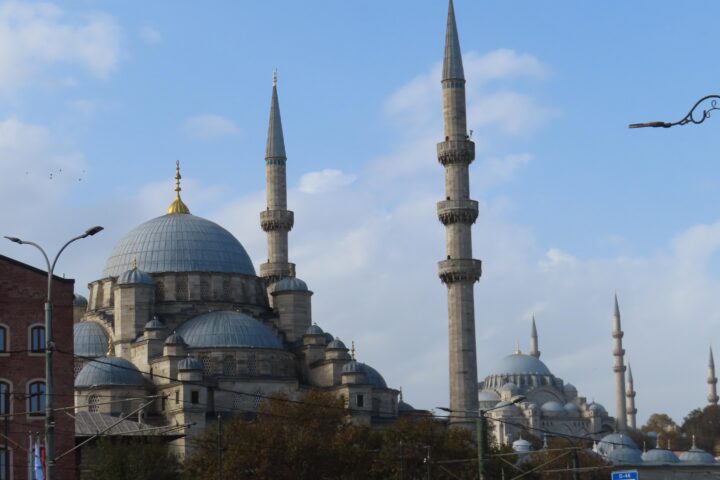
On the city tour, I was particularly interested in Hagia Sophia. Built as a Byzantine church, it became a mosque after the Ottoman conquest, and its history shows how successive empires have shaped Istanbul. It also showed me how Turkey’s past remains visible today, not only in its buildings but in the country’s cultural and religious identity.
What surprised me was how politically and socially divided Istanbul seemed. Different parts of the city have distinct political and religious identities: some districts are more supportive of the government and more religiously conservative, while others are more secular. I was fascinated by how visible those differences are within a single city. It made me realise that Turkey cannot be understood as having one shared political or social outlook, because people’s experiences and views differ so much depending on where they live.
The trip also made me think about my own case study, Iran. My research looks at the 1951 oil nationalisation and asks why owning its oil did not give Iran full control over its oil wealth. Learning about Turkey’s economy and its political relationships made me think harder about how political power and international relationships shape a country’s economic independence. Turkey and Iran have had very different experiences, but both show that development is about more than a country’s resources; it is also about who has influence over its economy and its decisions.
I found the trip valuable above all because it let me learn directly from Turkish academics and from people in the city. My one wish is that the cost had been a little lower, so that the experience could be open to even more students.